

Introduction
Have you ever bitten into something so crispy on the outside and stretchy-cheesy on the inside that you immediately needed to make it at home? That’s exactly what happens the first time you try a Korean corn dog.
These aren’t your average American corn dogs. Korean corn dogs are a whole different level of street food magic coated in a light, airy batter, rolled in crispy toppings, and stuffed with gooey mozzarella, sausage, or both. They’ve taken social media by storm, and honestly, the hype is completely justified.
The good news? You don’t need to book a flight to Seoul to enjoy them. Making Korean corn dogs at home is surprisingly simple once you understand the basics. In this complete guide, I’ll walk you through everything: the history, the perfect recipe, popular variations, and all the mistakes to avoid.
Whether you’re a first-timer or you’ve tried them before, this guide gives you everything you need to make truly incredible Korean corn dogs right in your own kitchen.
What Is a Korean Corn Dog?
The Street Food That Changed Everything
A Korean corn dog also called Hotteok stick or Gamja dog in some regions is a beloved Korean street food snack. However, despite sharing a name with the American corn dog, the two are quite different in both batter and toppings.
The American version uses a simple cornmeal batter. The Korean version, by contrast, uses a yeasted rice flour or wheat flour batter that creates a lighter, chewier texture. Also, the coating options are where things get truly exciting.
What Makes Korean Corn Dogs Unique
Here’s what sets the Korean version apart from everything else:
- The batter lighter, slightly sweet, and often chewier than American versions
- The fillings mozzarella cheese, sausage, rice cakes, or combinations of all three
- The coatings panko breadcrumbs, crushed ramen, french fries, or sugar crystals
- The toppings ketchup, mustard, mayo, or sweet-spicy sauces drizzled on top
In my experience, the mozzarella pull is the most satisfying part of the whole experience. That stretchy, molten cheese moment is genuinely worth every step of preparation.
A Brief History
Korean corn dogs became popular in the 1980s as Korean street vendors adapted the American corn dog concept. However, they transformed it into something uniquely Korean adding local ingredients, textures, and flavors that reflected Korean culinary creativity. As a result, by the 2010s, Korean corn dogs had become a global sensation, spreading through Korean dramas, social media, and Korean food stalls worldwide.
How to Make the Perfect Korean Corn Dog at Home
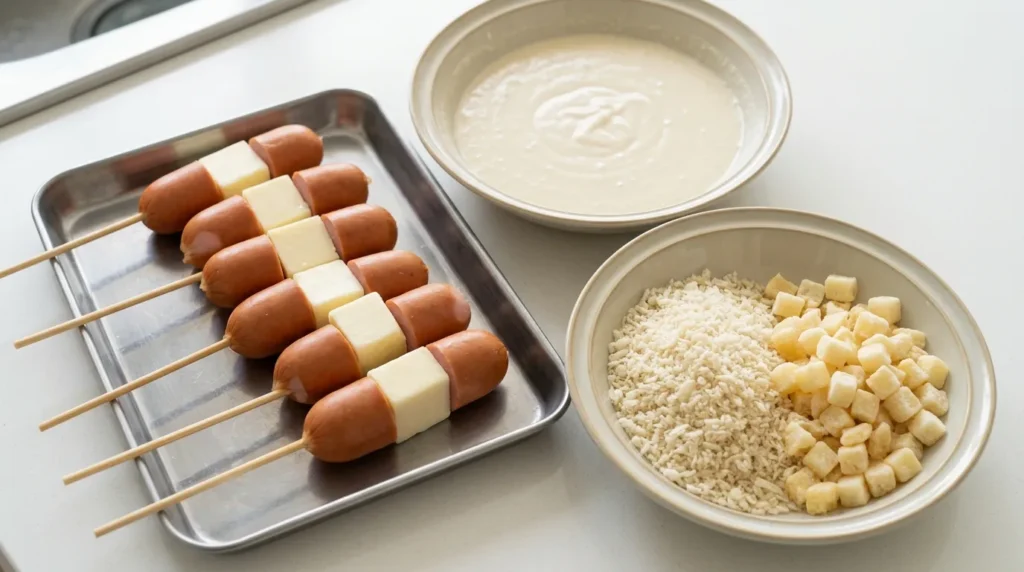
Ingredients You’ll Need
First, gather all your ingredients before starting. This makes the process smooth and stress-free.
the batter:
- 1 cup all-purpose flour
- 2 tablespoons sugar
- 1 teaspoon baking powder
- ½ teaspoon salt
- 1 egg
- ¾ cup warm milk
- 1 teaspoon instant yeast (optional for a chewier texture)
For the filling:
- 4 mozzarella cheese sticks (or blocks)
- 4 hot dog sausages
- Bamboo skewers or wooden sticks
for the coating:
- 1 cup panko breadcrumbs
- OR 1 cup crushed instant ramen noodles
- OR 1 cup crispy french fries (cut into small pieces)
- Vegetable oil for deep frying
toppings:
- Ketchup
- Yellow mustard
- Japanese mayo
- Sugar (for sprinkling trust me on this one)
Step-by-Step Korean Corn Dog Recipe
Follow these steps carefully for perfect results every time:
- Prepare your skewers. Push wooden sticks through the center of your cheese or sausage. For combo dogs, stack a piece of sausage on top and cheese on the bottom. Then freeze them for 30 minutes. This step is crucial because cold fillings hold their shape better during frying.
- Make the batter. Mix flour, sugar, baking powder, and salt in a bowl. Then add the egg and warm milk. Stir until you get a thick, smooth batter. The consistency should coat a spoon thickly similar to thick pancake batter.
- Let the batter rest. If you’re using yeast, cover the batter and let it rest for 20 minutes. As a result, you’ll get a lighter, airier texture. However, if you’re skipping yeast, you can move straight to the next step.
- Coat your filling. Pour your batter into a tall glass or jar this makes dipping much easier. Dip each frozen skewer fully into the batter, rotating to coat evenly. Work quickly so the batter sticks well.
- Roll in your coating. Immediately roll the battered skewer in panko breadcrumbs, crushed ramen, or your chosen topping. Press gently so the coating sticks all around.
- Heat your oil. Pour vegetable oil into a deep pan at least 3 inches deep. Heat to 350°F (175°C). Use a thermometer for accuracy, because oil temperature directly affects your results.
- Fry to golden perfection. Lower each corn dog carefully into the hot oil. Fry for 3 to 4 minutes, turning occasionally, until deep golden brown all over. Don’t overcrowd the pan fry two at a time maximum.
- Drain and top. Remove from oil and drain on paper towels for one minute. Then drizzle with ketchup, mustard, and mayo. For the authentic Korean experience, sprinkle a little sugar over the top before eating.
Pro Tip: Freezing your filling before battering is the single most important step. Cold filling keeps its shape, prevents cheese from leaking prematurely, and gives the batter time to cook properly around it. Don’t skip this step ever.
Korean Corn Dog Variations: Find Your Favorite
Popular Fillings and Coating Combinations
One of the best things about Korean corn dogs is how customizable they are. Therefore, once you’ve mastered the basic recipe, experimenting with variations becomes really fun.
| Variation Name | Filling | Coating | Best For |
| Classic Mozzarella | Mozzarella stick | Panko breadcrumbs | First-timers, cheese lovers |
| Gamja Dog | Sausage + mozzarella | Diced potato pieces | Crispy texture fans |
| Ramen Dog | Sausage | Crushed ramen noodles | Extra crunch lovers |
| Half and Half | Half sausage, half cheese | Panko breadcrumbs | Best of both worlds |
| Sweet Potato Dog | Sweet potato + mozzarella | Panko + sugar coating | Sweet and savory fans |
| Squid Ink Dog | Mozzarella | Squid ink batter + panko | Adventurous eaters |
| Vegan Dog | Plant-based sausage + vegan cheese | Panko breadcrumbs | Plant-based eaters |
Sauce Combinations Worth Trying
The sauce is what takes a Korean corn dog from good to absolutely unforgettable. Here are some favorite combinations:
- Classic: Ketchup + yellow mustard + sugar sprinkle
- Spicy: Gochujang mayo + sesame seeds
- Sweet: Honey + Japanese mayo + crushed nuts
- Umami: Teriyaki glaze + green onions
- Creamy: Ranch dressing + sriracha drizzle
The Famous Potato Corn Dog (Gamja Dog)
The Gamja dog is arguably the most visually stunning Korean corn dog variation. Small cubes of raw potato cover the outside of the battered dog before frying. As a result, each piece of potato crisps up separately during frying creating an incredibly crunchy, textured exterior that’s completely unique. Also, it photographs beautifully, which explains why it dominates Korean food social media.
Common Mistakes to Avoid When Making Korean Corn Dogs

Mistake 1: Skipping the Freezing Step
This is the most common mistake beginners make. Without freezing the filling first, the cheese melts and leaks into the oil before the batter cooks through. Therefore, always freeze your skewered fillings for at least 30 minutes ideally one hour.
Mistake 2: Batter That’s Too Thin
Thin batter slides off the filling and creates uneven coverage. As a result, you get bare spots and oil seeps into the filling. Your batter should coat a spoon thickly and hold its shape when you lift the skewer out. If it’s too runny, add flour one tablespoon at a time until you reach the right consistency.
Mistake 3: Wrong Oil Temperature
Frying at too low a temperature creates greasy, soggy corn dogs. Too high, and the outside burns before the inside heats through. Therefore, maintain oil at exactly 350°F (175°C) throughout frying. Use a kitchen thermometer; it’s a game-changer for consistent results.
Mistake 4: Overcrowding the Pan
Adding too many corn dogs at once drops the oil temperature rapidly. As a result, you get greasy, pale-colored dogs instead of crispy golden ones. Fry two at a time maximum, and let the oil return to temperature between batches.
Mistake 5: Eating Them Cold
Korean corn dogs are a fresh, hot street food experience. They lose their magic quickly as they cool down. Therefore, serve immediately after draining while the cheese is still molten and the exterior is at peak crispiness. Also, the cheese pull only works properly when the dog is piping hot.
Pro Tip: If you need to prepare Korean corn dogs ahead of time for a party, fry them until just light golden then let them cool completely. When ready to serve, re-fry for 90 seconds in hot oil. As a result, you get freshly crispy dogs without making everyone wait during the event.
Frequently Asked Questions About Korean Corn Dogs

1. What makes a Korean corn dog different from an American corn dog?
The main differences are the batter, coating, and filling options. American corn dogs use a thick cornmeal batter with a simple hot dog center. Korean corn dogs use a lighter wheat or rice flour batter sometimes with yeast for extra chewiness. Also, Korean versions offer creative coatings like crushed ramen, potato cubes, and panko breadcrumbs. The fillings are more varied too including mozzarella cheese sticks, rice cakes, and combinations of cheese and sausage. Finally, Korean corn dogs are typically topped with ketchup, mustard, mayo, and a sprinkle of sugar, a sweet-savory combination that’s genuinely addictive.
2. Can I make Korean corn dogs without a deep fryer?
Yes you don’t need a deep fryer at all. A deep, heavy-bottomed pan or Dutch oven works perfectly. Pour in enough vegetable oil to submerge the corn dogs at least 3 inches deep. Use a kitchen thermometer to monitor temperature, and maintain 350°F throughout frying. Also, an air fryer works as a lighter alternative, though the exterior won’t be quite as golden and crispy as the deep-fried version. If using an air fryer, spray generously with oil and cook at 375°F for 10 to 12 minutes, turning halfway through.
3. What cheese works best for Korean corn dogs?
Low-moisture mozzarella is the gold standard for Korean corn dogs. It melts beautifully, creates that iconic cheese pull, and doesn’t release too much moisture during frying. String cheese sticks work perfectly because they’re pre-portioned and the right size for skewering. However, you can also experiment with other melting cheeses cheddar, Gouda, or Monterey Jack all work well. Avoid fresh mozzarella (too much water content) or hard cheeses like Parmesan (they don’t melt properly).
4. Why do Koreans put sugar on corn dogs?
The sugar sprinkle sounds unusual but it’s one of the most beloved aspects of authentic Korean corn dogs. The light sweetness contrasts beautifully with the savory sausage and the tangy ketchup and mustard sauces. As a result, you get a sweet-savory-tangy flavor combination in every bite that’s genuinely unique to Korean street food culture. In my experience, skeptics become converts after just one bite. Therefore, don’t skip the sugar even if it seems strange at first.
5. How do I store and reheat leftover Korean corn dogs?
Store cooled Korean corn dogs in an airtight container in the refrigerator for up to two days. However, they lose their crispiness quickly, so reheating properly is essential. The best reheating method is a short fry in hot oil (350°F) for 60 to 90 seconds that restores the crispy exterior perfectly. Alternatively, an air fryer at 375°F for 5 to 6 minutes works well. Avoid microwaving if possible, because it makes the coating soggy and rubbery rather than crispy.
6. Are Korean corn dogs gluten-free?
Traditional Korean corn dog batter contains wheat flour, so they’re not naturally gluten-free. However, you can adapt the recipe using a gluten-free all-purpose flour blend as a direct substitute. Also, use certified gluten-free panko breadcrumbs for the coating and check your sausage labels carefully; many contain gluten in their fillings or casings. As a result, a fully gluten-free Korean corn dog is achievable with careful ingredient selection. However, always check individual product labels if you have celiac disease or serious gluten sensitivity.
7. Can I make a vegetarian or vegan Korean corn dog?
Absolutely. Vegetarian Korean corn dogs are easy to make simply using a plant-based sausage instead of pork or chicken. For fully vegan versions, also swap the mozzarella for a good-quality vegan mozzarella (the Violife or Miyoko’s brands melt well). Replace the egg in the batter with a flax egg (1 tablespoon ground flaxseed mixed with 3 tablespoons water). Also, use plant-based milk instead of regular milk. As a result, you get all the crispy, satisfying goodness of a Korean corn dog in a completely plant-based package.
Time to Make Your Own Korean Corn Dog
The Korean corn dog is one of those foods that genuinely lives up to its reputation. Crispy on the outside. Cheesy and satisfying on the inside. Customizable in a hundred different ways. Also, surprisingly achievable at home with basic kitchen equipment and a little practice.
The most important things to remember are: freeze your filling first, keep your batter thick, maintain oil temperature carefully, and serve immediately while hot. Get those four things right, and the rest takes care of itself.
Therefore, gather your ingredients, clear your kitchen counter, and give this recipe a try this weekend. Also, don’t forget the sugar sprinkle because once you try it, you’ll never skip it again.