
Introduction
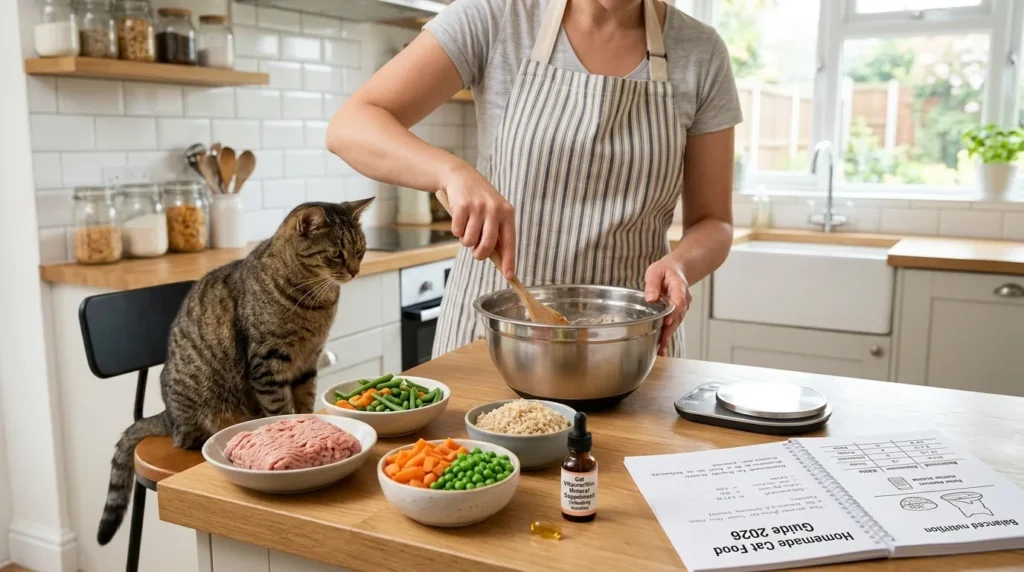
Your cat deserves the best food possible. However, scanning commercial cat food labels and seeing long lists of unrecognizable ingredients can leave you feeling genuinely uneasy. More and more cat owners are asking the same question: how to make cat food at home safely and nutritionally?
The good news is that homemade cat food is absolutely possible. Done correctly, it gives you complete control over every ingredient your cat eats. Also, many cats thrive on fresh, whole-food diets when meals are properly balanced.
However and this is really important, making cat food at home isn’t as simple as cooking up some chicken and calling it done. Cats have very specific nutritional needs that differ significantly from dogs and humans. Therefore, getting the balance right matters enormously.
In my experience, cat owners who take the time to learn the right approach see wonderful results. This guide walks you through everything: safe ingredients, balanced recipes, what to avoid, and how to do this properly. Let’s get started.
Why Learning How to Make Cat Food Is Worth It
The Real Benefits of Homemade Cat Food
Ever wondered what’s actually inside that tin of commercial cat food? Many products contain fillers, artificial preservatives, and low-quality protein sources that don’t fully serve your cat’s health. Therefore, making food at home appeals to owners who want full transparency over their pet’s diet.
Here are the key benefits of homemade cat food:
- Full ingredient control you know exactly what goes in every meal
- Higher quality proteins use fresh, human-grade meats
- No artificial additives no preservatives, colors, or flavor enhancers
- Better hydration fresh food contains more moisture than dry kibble
- Customizable adjust recipes for allergies, sensitivities, or medical needs
- Potentially better palatability many cats prefer the taste of fresh food
Understanding What Cats Actually Need
Cats are obligate carnivores. This means they must eat meat to survive. Unlike dogs or humans, cats can’t produce certain essential nutrients on their own. Therefore, they must get these nutrients directly from animal-based food sources.
Key nutrients your cat needs from food include:
- Taurine essential for heart and eye health
- Arachidonic acid an omega-6 fatty acid from animal fat
- Vitamin A (preformed) cats can’t convert beta-carotene like humans
- Vitamin B12 found in animal products only
- Niacin cats need dietary sources because their bodies don’t produce enough
- Water cats have a low natural thirst drive, so food moisture matters
How to Make Cat Food: Step-by-Step Beginner’s Guide
Before You Start Talk to Your Vet
Before making any homemade cat food, consult your veterinarian or a veterinary nutritionist. This step is non-negotiable. Every cat is different. Also, cats with health conditions like kidney disease, diabetes, or urinary issues need specially tailored diets. Therefore, professional guidance protects your cat’s long-term health.
Essential Equipment You’ll Need
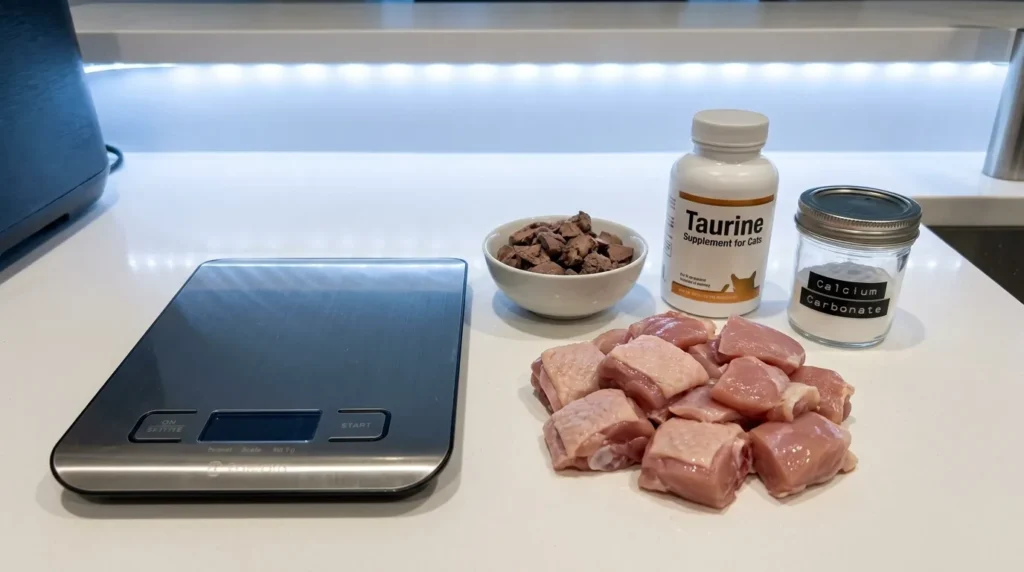
First, gather the right tools. Here’s what you need:
- Sharp kitchen knife and cutting board
- Food processor or blender
- Kitchen scale (for precise measurements)
- Meal prep containers with tight lids
- Cooking thermometer
- Ice cube trays (for freezing portions)
Step-by-Step: Basic Homemade Cat Food
Follow these steps carefully for a safe, balanced result:
- Choose your protein source. Chicken, turkey, rabbit, or salmon are excellent starting points. Always use fresh, human-grade meat. Remove all bones before cooking or grinding.
- Cook the meat thoroughly. Cook poultry and pork to an internal temperature of 165°F (74°C). This kills harmful bacteria like salmonella. However, some recipes using raw meat only attempt raw feeding after consulting your vet and understanding food safety protocols.
- Add organ meat in small amounts. The liver and kidneys provide essential vitamins. However, limit organ meat to about 5–10% of the total recipe. Too much liver causes vitamin A toxicity.
- Add a vet-approved supplement. This is the most critical step. Homemade cat food needs a feline-specific nutritional supplement to fill vitamin and mineral gaps. Products like BalanceIT Feline or Alnutrin are specifically formulated for homemade cat diets.
- Include a water source. Add water or low-sodium unsalted broth to increase moisture content. Hydration is especially important for cats prone to urinary issues.
- Grind or chop finely. Use a food processor to achieve a texture your cat accepts. Some cats prefer chunky textures. Others want a pâté consistency. Therefore, experiment to find what your cat enjoys most.
- Portion and store correctly. Divide meals into daily portions. Refrigerate portions for up to 3 days. Freeze additional portions in ice cube trays for up to 3 months.
Pro Tip: Introduce homemade cat food gradually over 7–10 days. Mix small amounts with your cat’s current food, slowly increasing the ratio. This prevents digestive upset and helps your cat adjust comfortably to the new diet.
Simple Homemade Cat Food Recipes to Try
Recipe 1: Basic Chicken and Liver Cat Food
This is one of the easiest and most nutritious starter recipes. Also, most cats absolutely love the flavor of chicken.
Ingredients (makes approximately 5 days of meals for one adult cat):
| Ingredient | Amount | Purpose |
| Boneless chicken thighs (cooked) | 400g | Primary protein source |
| Chicken liver (cooked) | 40g | Vitamin A, B12, iron |
| Chicken heart (cooked) | 40g | Taurine source |
| Water or unsalted broth | 100ml | Hydration |
| Feline supplement (e.g. BalanceIT) | As directed | Complete nutrition |
| Salmon oil | 1/2 tsp | Omega-3 fatty acids |
Instructions:
- Cook all meats thoroughly to safe internal temperatures
- Remove all bones completely
- Process in food processor to desired texture
- Add water, salmon oil, and supplement
- Mix thoroughly and portion into daily servings
- Refrigerate or freeze immediately
Recipe 2: Salmon and Turkey Cat Food
This recipe works especially well for cats with chicken sensitivities. In addition, salmon provides excellent omega-3 fatty acids for coat and skin health.
Ingredients:
| Ingredient | Amount | Purpose |
| Wild-caught salmon (cooked) | 300g | Protein and omega-3s |
| Ground turkey (cooked) | 150g | Lean protein |
| Turkey liver (cooked) | 30g | Essential vitamins |
| Water | 80ml | Hydration |
| Feline supplement | As directed | Complete nutrition |
Instructions:
- Cook salmon and turkey thoroughly
- Remove all skin and bones from salmon
- Blend together with liver and water
- Add supplement as directed on packaging
- Portion and refrigerate or freeze
Quick Comparison: Homemade vs. Commercial Cat Food
| Factor | Homemade Cat Food | Commercial Cat Food |
| Ingredient control | ⭐⭐⭐⭐⭐ | ⭐⭐ |
| Nutritional completeness | Requires supplements | Built-in (if complete diet) |
| Cost | Medium-High | Low-Medium |
| Preparation time | High | None |
| Palatability | Generally high | Varies |
| Vet oversight needed | Yes essential | Less critical |
| Shelf life | 3 days (fridge) | Months to years |
Dangerous Mistakes to Avoid When Making Cat Food at Home
Mistake 1: Skipping the Nutritional Supplement
This is the most serious mistake cat owners make. A homemade diet without a complete feline supplement creates dangerous nutritional deficiencies over time. Because cats can’t produce taurine or vitamin A from plant sources, these must come from the diet directly. Therefore, always use a vet-approved feline supplement in every batch.
Mistake 2: Using Toxic Ingredients
Several common human foods are highly toxic to cats. Therefore, never include these in any homemade cat food recipe:
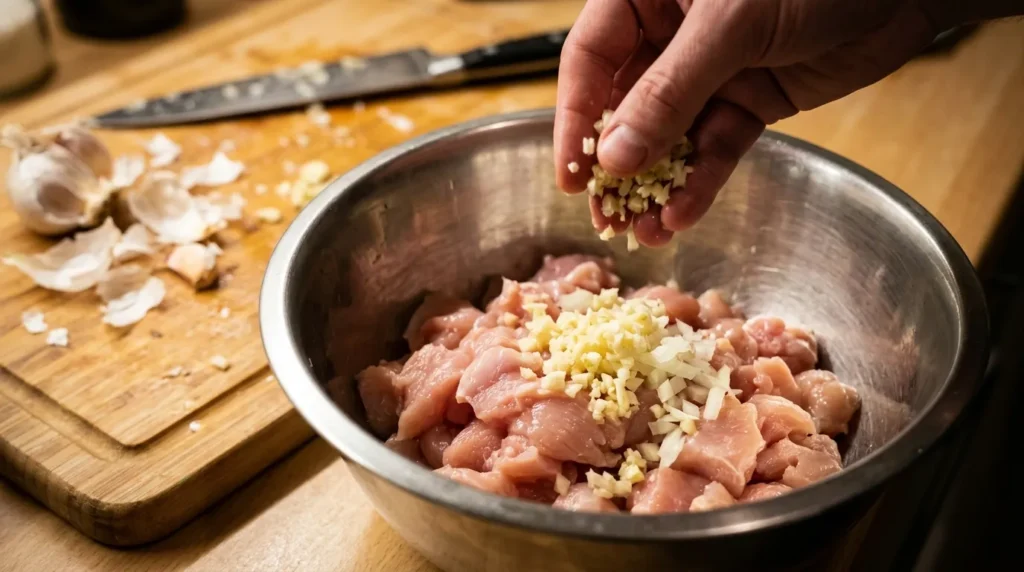
- Onions and garlic destroy red blood cells, causing anemia
- Grapes and raisins cause acute kidney failure
- Chocolate toxic to cats and dogs
- Xylitol artificial sweetener toxic to pets
- Raw dough expands in the stomach dangerously
- Alcohol even tiny amounts cause serious harm
- Macadamia nuts toxic and harmful
Mistake 3: Feeding Too Much Liver
Liver is nutritious in small amounts. However, feeding too much causes hypervitaminosis, a vitamin A toxicity. This condition causes bone deformity, joint pain, and serious health problems over time. Therefore, always keep liver to 5–10% of the total recipe maximum.
Mistake 4: Using Cooked Bones
Never add cooked bones to homemade cat food. Cooked bones splinter dangerously and cause internal injuries. However, if you choose raw feeding under veterinary guidance, raw meaty bones are handled differently. Therefore, always remove all bones before cooking and processing any homemade recipe.
Mistake 5: Skipping the Vet Consultation
Making homemade cat food without veterinary guidance is risky especially for cats with health conditions. Also, without professional nutritional oversight, it’s very difficult to ensure long-term dietary balance. Therefore, always work with a vet or board-certified veterinary nutritionist when transitioning your cat to homemade food.
Pro Tip: Use the BalanceIT.com recipe formulator developed by board-certified veterinary nutritionists to create customized, balanced homemade cat food recipes. You input your cat’s weight, age, and health status, and it generates a complete recipe with exact measurements. It’s free to use and genuinely invaluable for homemade cat feeders.
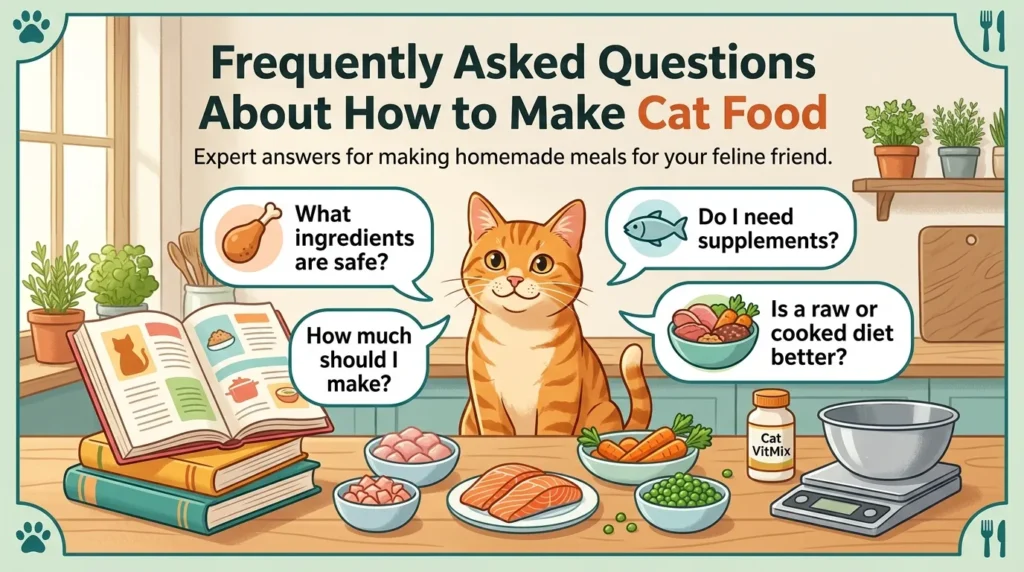
Frequently Asked Questions About How to Make Cat Food
1. Is it safe to make cat food at home?
Yes, homemade cat food is safe when prepared correctly. However, it requires careful planning, the right ingredients, and a feline-specific nutritional supplement to ensure complete nutrition. Cats have very specific dietary needs that are easy to miss without proper guidance. Therefore, always consult your vet or a veterinary nutritionist before switching to a fully homemade diet. A professionally formulated recipe is far safer than guessing at proportions.
2. What is the best protein to use when making cat food?
Chicken, turkey, rabbit, and salmon are all excellent protein choices for homemade cat food. Chicken thighs are a popular starting point because they’re affordable, widely available, and high in protein. However, variety is beneficial. Rotating proteins helps prevent nutritional imbalances and keeps your cat from becoming fixated on a single food. Also, always use human-grade, fresh meat and cook it thoroughly unless following a specifically formulated raw feeding protocol under vet guidance.
3. Do I need to add vegetables to homemade cat food?
Cats don’t need vegetables the way dogs or humans do. Because cats are obligate carnivores, plant matter isn’t a nutritional requirement. However, small amounts of cat-safe vegetables like cooked pumpkin or zucchini can add fiber and support digestive health. Also, they should never form a significant portion of the diet. Therefore, keep any vegetable additions minimal and always focus primarily on high-quality animal proteins.
4. How long does homemade cat food last in the fridge?
Homemade cat food lasts approximately 2 to 3 days in the refrigerator when stored in airtight containers. For longer storage, freeze portions in ice cube trays or small containers for up to 3 months. Also, always label containers with the preparation date. Thaw frozen portions in the refrigerator overnight rather than at room temperature. Never refreeze food that has already been thawed; this increases bacterial risk significantly.
5. Can kittens eat homemade cat food?
Kittens have significantly higher nutritional requirements than adult cats especially for protein, calcium, and phosphorus. Therefore, feeding kittens homemade food requires even more careful nutritional planning than adult cat diets. Because kittens grow rapidly, any nutritional gap has serious developmental consequences. Always consult your vet before feeding homemade food to kittens, and use a recipe specifically formulated for kitten growth stages rather than adapting an adult recipe.
6. Is raw or cooked homemade cat food better?
Both approaches have passionate advocates. Cooked homemade cat food is generally considered safer because cooking eliminates bacterial pathogens like salmonella and listeria. However, some cat owners and veterinarians argue that raw food preserves more natural nutrients and enzymes. Raw feeding carries real food safety risks for both your cat and your household. Therefore, if you’re interested in raw feeding, always consult your vet first and follow strict food handling protocols throughout.
7. How much homemade food should I feed my cat daily?
Daily food amounts depend on your cat’s weight, age, activity level, and health status. As a general guideline, most adult cats need approximately 60–80 calories per kilogram of body weight daily. However, homemade food calorie density varies by recipe. Therefore, ask your vet to calculate the exact daily amount for your specific cat. Overfeeding even healthy food leads to obesity, which carries serious health risks for cats over time.
Start Making Your Cat’s Food With Confidence
Learning how to make cat food at home is one of the most loving things you can do for your feline companion. Fresh ingredients, complete nutrition, and full control over every meal it’s a genuinely rewarding approach to cat care.
However, always remember that the key to success is proper nutritional balance. Therefore, use a vet-approved supplement, avoid toxic ingredients, and consult your veterinarian before making the switch. Also, introduce new food gradually to give your cat’s digestive system time to adjust.
Your cat deserves meals made with care and knowledge. With the right recipes, the right supplements, and your vet’s guidance, homemade can genuinely transform your cat’s health and happiness. how to make