
Introduction
Not every bag of dog food on the shelf deserves a place in your dog’s bowl. That’s a hard truth but it’s one every responsible dog owner needs to hear.
Knowing which dog food brands to avoid is just as important as knowing which ones to buy. The pet food market is massive. Not every brand prioritizes your dog’s health over their profit margins. Some use low-quality ingredients, misleading labels, and manufacturing practices that should concern any caring owner.
In my experience, the damage from poor-quality food often shows up slowly. A dull coat, low energy, or digestive problems can all trace back to what’s in the bowl. However, most owners don’t connect those dots until much later.
This guide gives you the honest information you need. You’ll learn which brands raise red flags, which ingredients to watch for, and how to make smarter choices at the pet store. Let’s protect your dog together.
Why Some Dog Food Brands to Avoid Are Hiding in Plain Sight
The Marketing Problem in Pet Food
Ever wondered how a product that’s mostly corn and by-products ends up looking like premium nutrition on the shelf? That’s the power of pet food marketing. Brands use words like “natural,” “wholesome,” and “premium” but these terms carry no legal definition in pet food labeling.
Therefore, a bag can say “natural” on the front while containing artificial preservatives on the back. That’s not a mistake. That’s a deliberate marketing choice designed to influence your buying decision.
What Makes a Brand Worth Avoiding?
Not every brand on an “avoid” list is dangerous. However, they share common problems that make them poor long-term choices for your dog’s health. Here’s what consistently defines lower-quality brands:
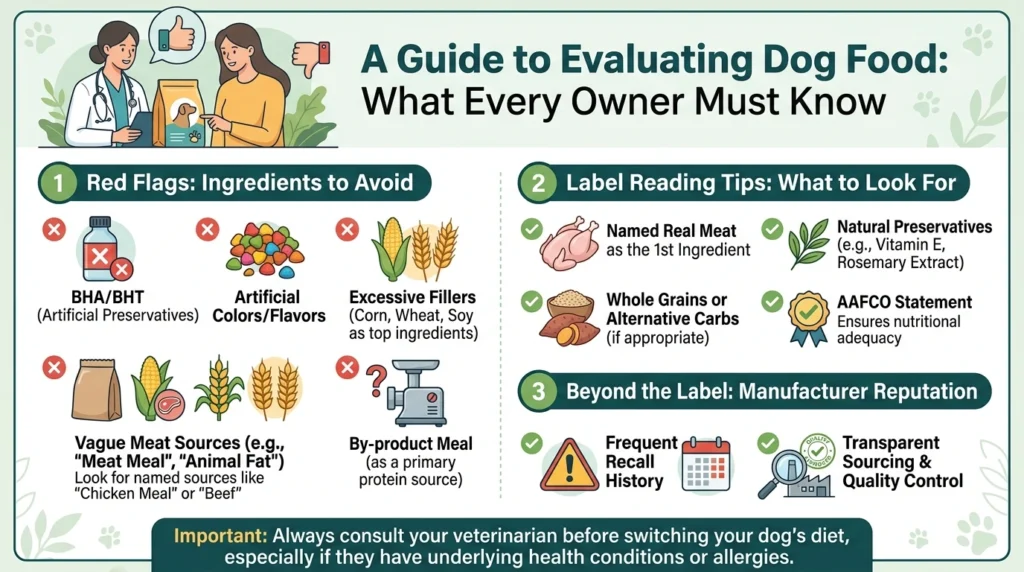
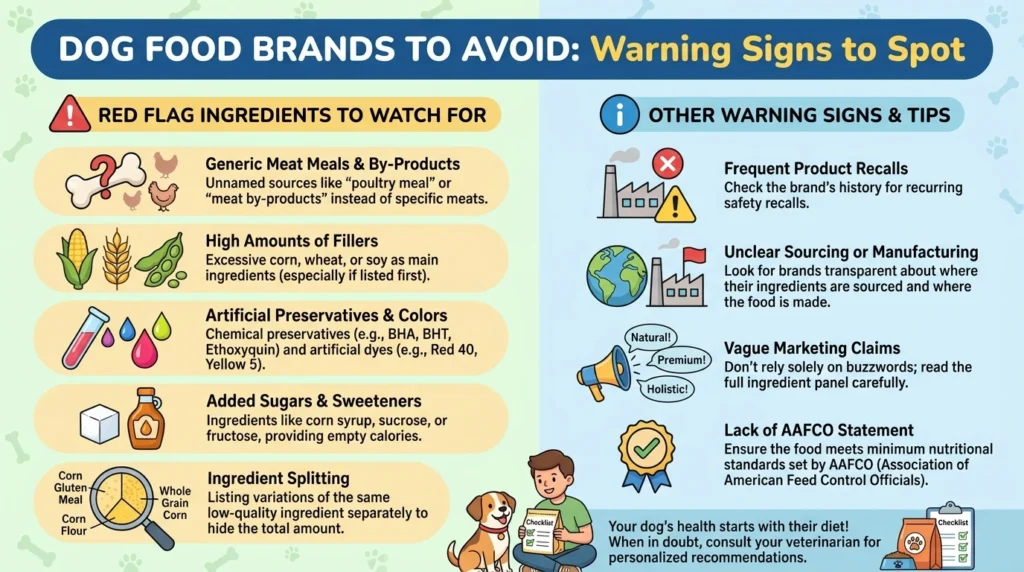
- Vague or unnamed protein sources “meat,” “poultry,” or “animal by-products” without a named species
- Corn, wheat, or soy as the first ingredient these fillers dominate the formula instead of real protein
- Artificial preservatives BHA, BHT, and ethoxyquin raise long-term safety concerns
- Artificial colors Red 40, Yellow 5, and Blue 2 serve zero nutritional purpose
- Multiple recalls especially for serious contamination like salmonella or aflatoxin
- No AAFCO nutritional adequacy statement the food hasn’t met minimum nutritional standards
- Ingredient splitting listing corn three different ways to hide how much is really in the food
Dog Food Brands to Avoid: The Warning Signs to Spot
How to Evaluate Any Brand Critically
You don’t need to memorize a list of bad brands. Instead, learn the evaluation system and you’ll spot a problematic brand anywhere. Here’s a step-by-step approach:
- Flip the bag immediately. Ignore the front entirely. All meaningful information is on the back label ingredient list, guaranteed analysis, and AAFCO statement.
- Read the first five ingredients carefully. These make up the bulk of the formula. A named animal protein chicken, beef, salmon should appear first. If corn, wheat, or “meat by-products” leads the list, that’s a red flag.
- Check for ingredient splitting. Look for the same ingredient listed multiple times in different forms. For example, “corn,” “corn gluten meal,” and “corn syrup” appearing separately disguise how much corn actually dominates the formula.
- Find the AAFCO statement. Every nutritionally complete food carries this statement. If it’s missing or says “complementary food only” the food isn’t a complete diet. Walk away.
- Look for artificial preservatives. BHA, BHT, and ethoxyquin appear in lower-quality brands. Instead, safer brands use mixed tocopherols (Vitamin E) or rosemary extract as natural alternatives.
- Search the brand’s recall history. Visit the FDA’s pet food recall database. A single isolated recall doesn’t doom a brand. However, a pattern of contamination recalls especially salmonella or aflatoxin signals serious quality control problems.
- Check manufacturing transparency. Does the brand disclose where their food is made? Brands using multiple unknown contract manufacturers carry higher risk. As a result, limited transparency often means limited accountability.
Pro Tip: Before buying any new dog food brand, spend two minutes Googling the brand name plus the word “recall.” Also check the FDA database at fda.gov directly. This simple habit takes minutes and could genuinely protect your dog’s health.
Brands and Ingredients That Consistently Raise Concerns
The Concerning Brands List Based on Public Data
This section draws only from publicly available FDA recall data, independent ingredient analysis, and expert nutritional reviews. No brand is included based on opinion alone.
| Brand | Main Concerns | Recall History |
| Ol’ Roy (Walmart store brand) | Unnamed protein, heavy corn fillers, artificial preservatives | Yes multiple |
| Kibbles ‘n Bits | Corn and soy dominate, artificial colors, low meat content | Yes |
| Gravy Train | Pentobarbital contamination found in 2018 FDA testing | Yes serious |
| Sportmix | Aflatoxin contamination linked to dozens of dog deaths in 2021 | Yes serious |
| Alpo | By-products as primary protein, artificial flavors | Yes |
| Ol’ Roy Puppy | Same filler-heavy profile as adult version concerning for developing puppies | Yes |
The Most Serious Recall Cases
Two brands deserve special mention because their recalls involved genuine safety emergencies, not just labeling issues.
Gravy Train made national news in 2018. FDA testing found trace amounts of pentobarbital a euthanasia drug in wet food products. This strongly suggested euthanized animals entered the supply chain. That’s not a minor quality lapse. That’s a fundamental manufacturing failure.
Sportmix faced a major FDA investigation in 2021. Aflatoxin poisoning caused by toxic mold on corn connected to dozens of dog deaths across multiple states. The brand recalled millions of pounds of product. However, many families lost their dogs before the recall happened.
These cases aren’t meant to scare you. They’re documented public records. And they explain exactly why knowing which dog food brands to avoid genuinely matters.
Ingredients That Are Red Flags on Any Brand
Beyond specific brands, watch for these ingredients on any label:
- Propylene glycol keeps semi-moist food chewy; already banned in cat food by the FDA
- BHA and BHT synthetic antioxidants classified as possible carcinogens by the World Health Organization
- Corn syrup added sugar that causes blood sugar spikes and contributes to obesity
- Ethoxyquin originally developed as a pesticide; still permitted in some pet foods
- Rendered fat from unspecified sources could come from restaurant grease traps or unregulated sources
- Artificial colors purely cosmetic; dogs don’t care what color their food is
[Best Dog Food Near Me: Smart Buying Guide for 2026]
Warnings Every Dog Owner Needs to Hear
Warning 1: “Grain-Free” Doesn’t Mean Healthier
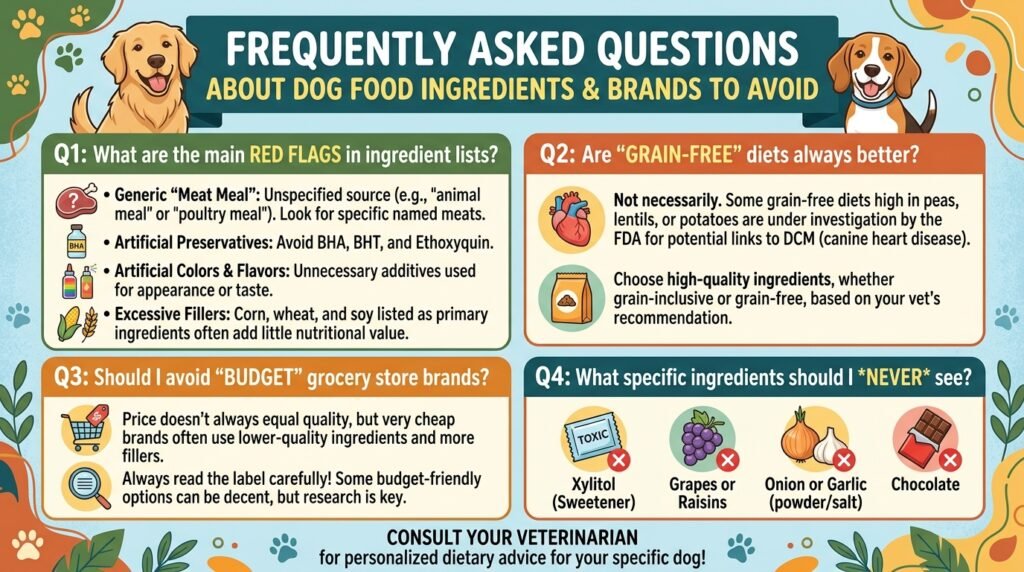
Many owners switch to grain-free brands thinking they’re making a healthier choice. However, the FDA has been investigating a link between grain-free diets and dilated cardiomyopathy (DCM) , a serious heart condition since 2018. Grain-free formulas often replace grains with large amounts of peas, lentils, and legumes. As a result, these ingredients may disrupt taurine absorption in some dogs. Therefore, don’t assume grain-free automatically means better always consult your vet before switching.
Warning 2: “Natural” Labels Mean Nothing
As mentioned earlier, “natural” has no legal definition in pet food. Therefore, any brand can use it freely regardless of what’s actually inside the bag. Also, “holistic” is completely unregulated. Don’t let these marketing words influence your decision. Instead, read the ingredient list every single time.
Warning 3: Cheap Food Often Costs More Long-Term
Lower-quality foods with heavy fillers are less digestible. As a result, your dog absorbs less nutrition per cup and eats more to compensate. Also, poor nutrition compounds over years into health problems that require expensive vet treatment. Therefore, a modest investment in better food often saves money long-term. Consult your vet about the best food option within your budget.
Warning 4: Don’t Trust Star Ratings Alone
Online star ratings for dog food mostly measure whether the dog liked the taste and whether shipping arrived on time. They don’t measure nutritional adequacy, ingredient quality, or manufacturing safety. Therefore, a 4.8-star rating on a retailer website tells you almost nothing about whether the food is actually good for your dog.
Pro Tip: A simple three-check system works for any bag. First, confirm a named protein leads the ingredient list. Then find the AAFCO nutritional adequacy statement. Finally, check the FDA recall database for the brand. If a food passes all three checks, it clears the basic quality bar.
Frequently Asked Questions About Dog Food Brands to Avoid
1. How do I know if a dog food brand has been recalled?
The most reliable source is the FDA’s official pet food recall database at fda.gov/animal-veterinary. You can search by brand name or browse recent recalls. Also, the website Dog Food Advisor maintains a comprehensive recall history tracker that’s well-organized and easy to use. In addition, signing up for FDA email alerts means you receive direct notification of any new recall before news coverage catches up. This two-minute sign-up could genuinely save your dog’s life.
2. Is Ol’ Roy dog food safe for my dog?
Ol’ Roy meets minimum AAFCO standards technically. However, it uses lower-quality ingredients including unnamed protein sources, heavy corn fillers, and artificial preservatives that make it a poor long-term nutritional choice. Also, it has a troubled recall history. For a dog with no health issues, it won’t cause immediate harm. However, better options exist at only slightly higher price points like Purina ONE or Iams that deliver meaningfully superior nutrition. Therefore, if budget is a concern, those mid-range brands are a smarter choice than Ol’ Roy.
3. What dog food brands do vets actually recommend?
Veterinarians most consistently recommend Purina Pro Plan and Hill’s Science Diet, both backed by extensive peer-reviewed nutritional research and feeding trial-validated AAFCO compliance. Royal Canin also earns frequent recommendation, especially for breed-specific or condition-specific needs. These brands appear on vet recommendation lists because of the science behind them, not marketing relationships. Therefore, when in doubt, ask your own vet what they recommend for your dog’s specific age, size, and health status.
4. Are store brand dog foods always bad?
Not always but they require careful scrutiny. Some store brand foods, like Tractor Supply’s 4Health line, are manufactured by reputable companies and offer genuine value. However, others like Ol’ Roy use lower-quality ingredients to hit a price point. Therefore, apply the same evaluation process to store brands as to any other food. Read the ingredient list, check the AAFCO statement, and research the recall history before deciding.
5. What are the most dangerous ingredients to avoid in dog food?
The ingredients that raise the most serious safety concerns include:
- Pentobarbital a euthanasia drug found in some rendered meat products
- Aflatoxin a toxic mold that grows on corn in poor storage conditions
- BHA and BHT synthetic preservatives classified as possible carcinogens
- Propylene glycol a humectant already banned in cat food
- Ethoxyquin originally a pesticide, still permitted at certain levels in pet food
- Unnamed rendered fats no species identified, no quality guarantee
Therefore, scan every label for these ingredients before buying regardless of how premium the brand looks on the outside.
6. Can poor dog food cause long-term health problems?
Yes and this is one of the most important reasons to choose carefully. Poor nutrition compounds slowly over months and years. In my experience, dogs fed lower-quality food long-term often develop dull coats, low energy, digestive problems, and weight issues that owners don’t initially connect to diet. Also, some health problems like obesity-related joint disease or diet-linked heart conditions are genuinely difficult and expensive to reverse. Therefore, investing in better food from the start is one of the most meaningful things you can do for your dog’s long-term wellbeing. Always consult your vet if you suspect your dog’s current food is contributing to health issues.
7. How do I switch my dog away from poor-quality food safely?
Always transition gradually over 7 to 10 days. Start by mixing 25% new food with 75% old food for the first two to three days. Then shift to 50/50 for the next two days. After that, move to 75% new and 25% old. Finally, complete the switch to 100% new food by day ten. This gradual approach prevents digestive upset which is especially important when moving from a heavily processed food to a higher-quality formula with different ingredients.
Protect Your Dog Starting With the Next Bag
Knowing which dog food brands to avoid puts you ahead of most dog owners. The truth is, many people feed their dogs whatever is familiar, convenient, or on sale without ever reading the label. However, you’re clearly not that kind of owner.
The key takeaways are simple. First, always read the back label, not the front. Then check for a named protein in the first position. After that, verify the AAFCO nutritional adequacy statement. Finally, search the FDA recall database for the brand before buying.
Better brands like Purina Pro Plan, Hill’s Science Diet, and Purina ONE exist at every budget level. Your dog deserves the best nutrition you can provide. And now you have the knowledge to make that happen.