Introduction
Your dog deserves the very best every single day. But finding the right adult dry dog food can feel overwhelming. There are hundreds of brands, fancy labels, and confusing ingredient lists everywhere you look.
So, how do you actually choose the right kibble? That’s exactly what this guide is here for. In my experience, most dog owners pick food based on price or packaging and that’s where things go wrong.
Here’s the truth: a good adult dry dog food makes a visible difference. You’ll notice a shinier coat, better digestion, and more energy in your dog. Therefore, choosing wisely really matters for your dog’s long-term health.
Let’s break it all down simply, honestly, and without the confusing jargon.
What Is Adult Dry Dog Food and Why Does It Matter?
Understanding the Basics First
Adult dry dog food commonly called kibble is the most popular way to feed dogs worldwide. However, not all kibbles are the same. The quality difference between brands can be enormous.
Dry food is made by combining meat, grains or vegetables, fats, and vitamins. These ingredients are then cooked and shaped into small pieces. As a result, the food becomes shelf-stable for months without refrigeration.
Why Adults Dogs Need a Specific Formula
Have you ever wondered why puppy food and adult food are different? The reason is simple: adult dogs have different nutritional needs.
Puppies need higher calories for rapid growth. Adult dogs, however, need balanced nutrition to maintain a healthy weight and strong muscles. Therefore, feeding your adult dog a puppy formula long-term can lead to weight gain and other health issues.
Key Nutritional Needs for Adult Dogs
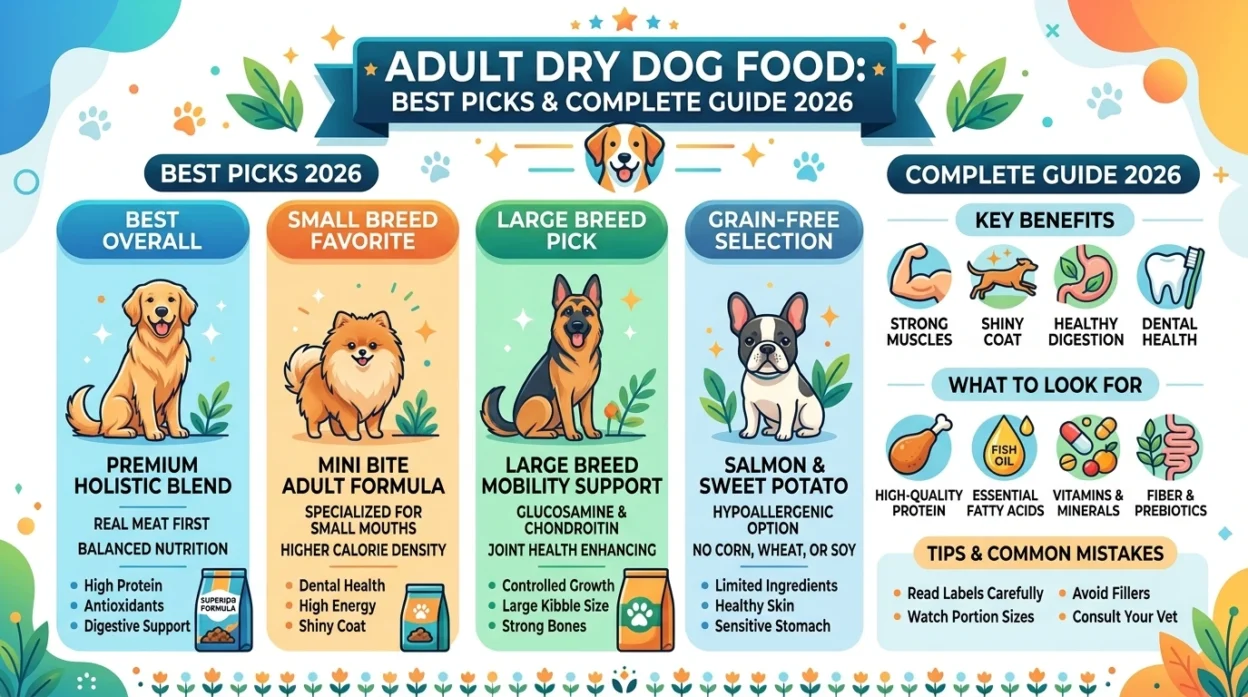
Here’s what a good adult dry dog food should provide:
- Protein: At least 18–25% for muscle maintenance
- Fat: Around 10–15% for energy and coat health
- Fiber: 3–5% to support healthy digestion
- Omega-3 fatty acids: For brain and skin health
- Vitamins and minerals: For immune support and bone strength
Also, always check that the food carries an AAFCO nutritional adequacy statement. This confirms the food meets minimum nutritional standards for adult dogs.
How to Choose the Best Adult Dry Dog Food: Step-by-Step

A Simple Process That Actually Works
Choosing the right adult dry dog food doesn’t have to be complicated. Follow these steps and you’ll make a confident decision every time.
- Check the first ingredient. Always look for a named animal protein chicken, beef, salmon, or turkey. If corn or wheat comes first, put the bag back on the shelf.
- Read the AAFCO statement. Find it on the back panel. Look for “complete and balanced based on feeding trials” this is stronger than just “formulated to meet” standards.
- Avoid artificial additives. Steer clear of BHA, BHT, ethoxyquin, and artificial colors. These ingredients offer zero nutritional benefit to your dog.
- Consider your dog’s size. Large breed adult dogs need different calcium levels than small breeds. Therefore, always choose a size-appropriate formula when possible.
- Factor in your dog’s activity level. An active working dog needs more calories than a relaxed house dog. Most bags show feeding guidelines based on weight and activity. Use them as your starting point.
- Calculate the daily feeding cost. Don’t just compare bag prices. Instead, divide the bag price by the number of days it lasts. A premium bag often costs less per day than you’d expect.
- Transition slowly over 7 to 10 days. Never switch food overnight. Mix 25% new food with 75% old food to start. Then gradually shift the ratio to avoid digestive upset.
Pro Tip: Take a photo of your dog’s current food bag before going to the store. That way, you can compare ingredients side by side on the spot without relying on memory.
[Best Dry Dog Food Brands: Top Picks & Guide 2026]
Best Adult Dry Dog Food Brands in 2026: Honest Comparison
Top Picks Across Different Budgets
Here’s how the most popular adult dry dog food brands compare across the key factors that actually matter:
| Brand | Price Range | First Ingredient | AAFCO Validated | Best For |
| Purina Pro Plan Adult | $$$ | Chicken | Feeding Trials | Overall best nutrition |
| Hill’s Science Diet Adult | $$$ | Chicken Meal | Feeding Trials | Vet-recommended daily feeding |
| Royal Canin Adult | $$$ | Chicken By-product | Feeding Trials | Breed-specific needs |
| Purina ONE Adult | $$ | Chicken | Some Formulas | Best mid-range value |
| Blue Buffalo Life Protection | $$ – $$$ | Deboned Chicken | Some Formulas | Natural ingredient focus |
| Iams Adult | $$ | Chicken | Some Formulas | Budget-friendly solid option |
| Orijen Adult | $$$$ | Free-Run Chicken | Limited | Maximum ingredient quality |
| Purina Dog Chow Adult | $ | Whole Grain Corn | Formulation | Tight budget option |
My Honest Top Three Picks
Best Overall: Purina Pro Plan Adult
This is the brand most vets recommend and for good reason. Real chicken leads the formula. In addition, it contains prebiotic fiber, omega-6 fatty acids, and live probiotics in select versions. The research behind this food is genuinely impressive.
Best Mid-Range: Purina ONE Adult
For budget-conscious owners, Purina ONE delivers real-meat-first nutrition at an accessible price. There’s no corn or wheat filler. Also, the protein and fat levels are solid for most healthy adult dogs.
Best Premium: Orijen Adult
If ingredient quality is your top priority, Orijen leads the market. Around 85% of ingredients come from animal sources. However, the daily cost is significantly higher so it’s best suited for owners who can comfortably accommodate the premium price.
Common Mistakes to Avoid With Adult Dry Dog Food
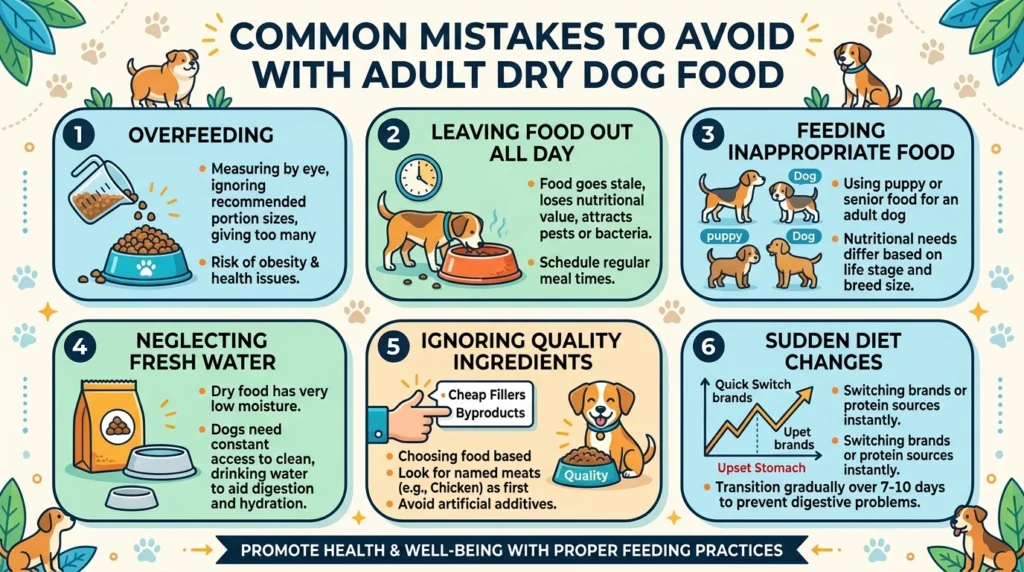
Are You Making These Errors?
Even experienced dog owners make these mistakes. However, knowing about them ahead of time means you can easily avoid them.
Mistake 1 Choosing Grain-Free Without a Medical Reason
Grain-free adult dry dog food sounds healthier but the science doesn’t support that for most dogs. Since 2018, the FDA has been investigating a potential link between grain-free diets and dilated cardiomyopathy (DCM) , a serious heart condition. Therefore, unless your vet specifically recommends grain-free, stick with grain-inclusive formulas.
Mistake 2 Overfeeding Because Your Dog Seems Hungry
Dogs are enthusiastic eaters. However, that doesn’t mean they need more food. Overfeeding leads to weight gain, which puts extra stress on joints and organs. Always measure portions with a proper measuring cup, never estimate by eye.
Mistake 3 Ignoring the Expiration Date
Dry dog food does go stale. In addition, the fat in kibble can go rancid after a bag is opened. Always check the best-by date before buying. Also, aim to finish any opened bag within six weeks for maximum freshness.
Mistake 4 Buying Based on the Front Label Only
“Natural,” “holistic,” and “premium” sound great on a bag. However, these words are largely unregulated in pet food. Therefore, always flip the bag and read the actual ingredient list and guaranteed analysis before deciding.
Mistake 5 Skipping the Transition Period
Switching adult dry dog food overnight causes digestive upset almost every time. Even switching between two quality brands requires a gradual transition. As a result, always spend 7 to 10 days mixing old and new food before completing the switch.
Pro Tip: Keep a simple two-week journal when switching foods. Note your dog’s stool quality, energy, coat, and appetite daily. This helps you spot improvements or any issues much more clearly than relying on memory alone.
Frequently Asked Questions About Adult Dry Dog Food
1. How much adult dry dog food should I feed my dog each day?
This depends on your dog’s weight, age, breed, and activity level. As a starting point, use the feeding guidelines printed on your specific food’s packaging. These guidelines are calculated for the average dog at each weight range. However, every dog is different so monitor your dog’s body condition closely. You should be able to feel your dog’s ribs without pressing hard, but they shouldn’t be clearly visible. If your dog is gaining or losing weight unexpectedly, adjust portions by 10% and reassess over two to three weeks. Your vet can also give you a precise daily caloric target based on your dog’s individual profile.
2. When should I switch my dog from puppy food to adult dry dog food?
Most dogs transition to adult food between 12 and 18 months of age. However, large breed dogs often benefit from staying on a large breed puppy formula until 18 to 24 months because their skeletal development takes longer. Giant breeds may need puppy food until 24 months or more. Therefore, always check with your vet about the right timing for your specific breed. Transitioning too early can miss important developmental nutrition. Transitioning too late can contribute to unnecessary weight gain from the higher caloric density of puppy formulas.
3. Is adult dry dog food better than wet food for adult dogs?
Neither is universally better, both have genuine advantages. Adult dry dog food wins on convenience, cost, shelf life, and dental benefits from chewing. Wet food provides higher moisture content, which supports hydration and suits picky eaters or dogs with dental issues. Many owners find that mixing a small amount of wet food into dry kibble gives their dog the best of both options. For most healthy adult dogs, a complete and balanced dry dog food is a perfectly adequate sole diet. However, always consult your vet if your dog has specific health conditions that might affect which format is most beneficial.
4. What ingredients should I avoid in adult dry dog food?
Several ingredients consistently raise concerns among pet nutrition experts. First, avoid artificial preservatives like BHA, BHT, and ethoxyquin. These synthetic chemicals extend shelf life but have questionable long-term safety profiles. Also avoid artificial colors like Red 40 and Yellow 5 these serve no nutritional purpose whatsoever. In addition, watch out for vague protein sources like “meat by-product meal” or “animal digest” without a named species. Finally, be cautious of ingredient splitting where a single ingredient like corn appears multiple times in different forms to disguise how much of the formula it actually represents.
5. Can I mix two different adult dry dog food brands together?
You can but there’s usually no nutritional reason to do so if each food is already complete and balanced. Mixing two different foods makes it harder to identify the cause if your dog develops a sensitivity or digestive issue. The one scenario where mixing genuinely makes sense is during a transition period gradually swapping old food for new over 7 to 10 days. Some owners also mix a small amount of a premium food into a budget brand to improve quality within a tight budget. If you do this, make sure both foods are appropriate for your dog’s life stage and size.
6. How do I store adult dry dog food to keep it fresh?
Proper storage directly affects nutritional quality and food safety. Keep kibble in its original bag; the inner lining specifically protects against moisture, light, and oxygen degradation. Clip the bag tightly shut and place it inside an airtight hard container for extra protection. Store in a cool, dry location away from direct sunlight and heat sources. Never pour food directly into a plastic bin without the bag fat residue builds up on the sides and can contaminate fresh food. Once opened, aim to finish the bag within six weeks for the best nutritional integrity and freshness.
7. Is grain-free adult dry dog food safe for my dog?
For most healthy adult dogs grain-free diets are not recommended without a medical reason. The FDA has been actively investigating a potential link between grain-free diets and dilated cardiomyopathy (DCM) in dogs since 2018. This investigation found that many affected dogs were eating grain-free foods high in peas, lentils, and legumes as primary ingredients. Grains are not inherently harmful to dogs, and most dogs digest them perfectly well. Therefore, unless your vet has specifically diagnosed a grain sensitivity or allergy, a high-quality grain-inclusive adult dry dog food is the safer and better-researched choice for your dog’s long-term heart health.
Making the Right Choice for Your Adult Dog
Finding the right adult dry dog food doesn’t have to feel overwhelming anymore. Start with a named protein first on the ingredient list. Check the AAFCO feeding trial statement. Choose a formula that matches your dog’s size and activity level. Then transition gradually and give the food a proper 8 to 12 week trial before evaluating results.
Brands like Purina Pro Plan, Hill’s Science Diet, and Purina ONE consistently deliver the quality, research backing, and safety record that adult dogs deserve. Your vet is always your best resource for personalized guidance specific to your dog’s health profile.