

Introduction
Did you know that your dog’s breed can predict the health problems they’re most likely to face? It’s true and understanding this early can genuinely save your dog’s life.
Dog health problems by breed are more common than most owners realize. A Golden Retriever and a Bulldog face completely different health challenges. However, many owners don’t discover this until something goes wrong.
That’s exactly why this guide exists. Here, you’ll find a clear, honest breakdown of the most common health issues for popular breeds. You’ll also get practical tips to prevent problems before they start.
In my experience, dogs whose owners understand breed-specific risks live longer, healthier lives. So let’s get into it. Your dog is counting on you.
Why Dog Health Problems Differ by Breed
Every Breed Has a Unique Health Blueprint
Not all dogs are built the same. Therefore, their health vulnerabilities differ significantly too. Breeding history, body shape, and genetics all play major roles.
For example, flat-faced breeds like Pugs struggle to breathe properly. Large breeds like Great Danes, however, face serious joint and heart issues. Small breeds, on the other hand, tend to have dental and liver concerns.
Understanding these differences helps you become a proactive dog owner. In addition, early awareness means earlier treatment which makes a huge difference in outcomes.
The Role of Genetics in Breed-Specific Disease
Selective breeding over centuries has shaped each breed’s physical traits. However, it has also locked in certain genetic health risks along the way.
Because of this, responsible breeders now test their dogs for inherited conditions. So when you’re buying a puppy, always ask for health clearances. That one step alone can prevent years of heartbreak and expensive vet bills.
Most Common Dog Health Problems by Breed
Large Breeds Joint and Heart Concerns
Large and giant breed dogs face unique physical challenges. Their size puts enormous pressure on joints and the cardiovascular system.
German Shepherd
- Hip dysplasia a malformed hip joint causing pain and lameness
- Degenerative myelopathy a progressive spinal cord disease
- Bloat (GDV) a life-threatening stomach condition
Golden Retriever
- Cancer Golden Retrievers have one of the highest cancer rates of any breed
- Hip and elbow dysplasia common and often inherited
- Heart disease subvalvular aortic stenosis affects many Goldens
Great Dane
- Bloat extremely high risk; can be fatal within hours
- Dilated cardiomyopathy an enlarged, weakened heart
- Wobbler syndrome a neck and spinal condition causing instability
Pro Tip: For large breeds, feed two smaller meals daily instead of one large meal. This simple habit significantly reduces bloat risk, one of the most dangerous conditions big dogs face.
Small Breeds Dental, Joint, and Organ Issues
Small dogs live longer on average. However, they deal with a very different set of health challenges throughout their lives.
Chihuahua
- Patellar luxation a kneecap that slips out of position
- Dental disease overcrowded teeth in a tiny mouth cause serious problems
- Hydrocephalus fluid on the brain, especially in puppies
Dachshund
- Intervertebral disc disease (IVDD) their long spine is highly vulnerable
- Obesity extra weight puts dangerous pressure on their backs
- Cushing’s disease an adrenal gland disorder common in the breed
Yorkshire Terrier
- Portosystemic shunt a liver condition affecting blood flow
- Tracheal collapse the windpipe weakens, causing breathing problems
- Hypoglycemia low blood sugar, especially in young or tiny dogs
Flat-Faced Breeds Breathing and Eye Problems
Brachycephalic breeds are incredibly popular. However, their adorable flat faces come with serious health trade-offs that every owner should understand.
French Bulldog
- Brachycephalic obstructive airway syndrome (BOAS) restricted breathing
- Spinal malformations their screw tails often link to spine issues
- Skin fold infections moisture trapped in facial wrinkles causes irritation
Pug
- Eye problems their prominent eyes are prone to injury and ulcers
- Breathing difficulties similar to French Bulldogs, BOAS is very common
- Obesity Pugs love food and gain weight easily
Bulldog (English)
- Hip dysplasia very common in the breed
- Cherry eye a prolapsed gland in the eyelid
- Skin infections wrinkles need daily cleaning to prevent bacterial growth
[Dog Health Problems and Solutions: Complete 2026 Guide]
How to Identify Dog Health Problems by Breed Early
Watch for These Warning Signs
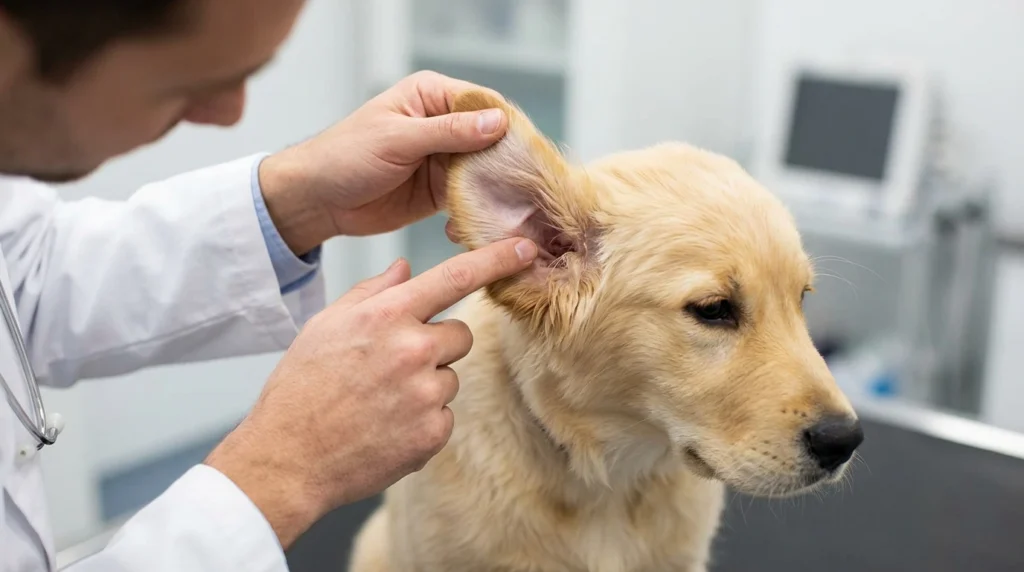
Early detection makes a massive difference in treatment outcomes. Therefore, knowing what to watch for in your specific breed is genuinely valuable knowledge.
Here are the most important warning signs to watch in any breed:
- Changes in appetite or water intake sudden shifts often signal underlying illness
- Limping or reluctance to move joint problems often start subtly
- Labored or noisy breathing especially important in flat-faced breeds
- Unexplained weight gain or loss both can indicate hormonal or digestive issues
- Excessive scratching or skin irritation allergies and infections show up this way
- Bloated or distended abdomen this is an emergency in large breeds
- Changes in behavior or energy lethargy often signals that something isn’t right
Schedule Breed-Specific Vet Screenings
Not all vet check-ups are created equal. In fact, your vet should tailor screenings to your dog’s specific breed risks.
For example, German Shepherds should receive regular hip X-rays. Golden Retrievers, however, benefit from annual cardiac evaluations. Dachshunds need spinal assessments, especially if they jump frequently.
Ask your vet specifically: “What health screenings does my breed need?” That one question can make all the difference in catching problems early.
Pro Tip: Keep a simple health journal for your dog. Note their weight, appetite, energy, and any unusual behaviors monthly. Patterns in this journal help your vet spot problems much earlier than annual visits alone would allow.
Breed-Specific Health Problems Quick Reference Table
Here’s a helpful comparison of common health issues across popular breeds:
| Breed | Size | Top Health Risk | Second Risk | Prevention Priority |
| German Shepherd | Large | Hip Dysplasia | Bloat | Joint supplements, two meals |
| Golden Retriever | Large | Cancer | Heart Disease | Annual cardiac checks |
| French Bulldog | Small | Breathing (BOAS) | Spine Issues | Avoid heat, limit exercise |
| Dachshund | Small | IVDD (Back) | Obesity | Ramps, weight management |
| Pug | Small | Eye Injuries | Obesity | Eye drops, controlled diet |
| Great Dane | Giant | Bloat | Heart Disease | Slow feeder bowls, screening |
| Labrador | Large | Obesity | Hip Dysplasia | Portion control, exercise |
| Chihuahua | Toy | Dental Disease | Patellar Luxation | Daily tooth brushing |
| Boxer | Large | Cancer | Heart Arrhythmia | Annual cardiac ECG |
| Cocker Spaniel | Medium | Ear Infections | Eye Disease | Weekly ear cleaning |
Common Mistakes Owners Make With Breed-Specific Health
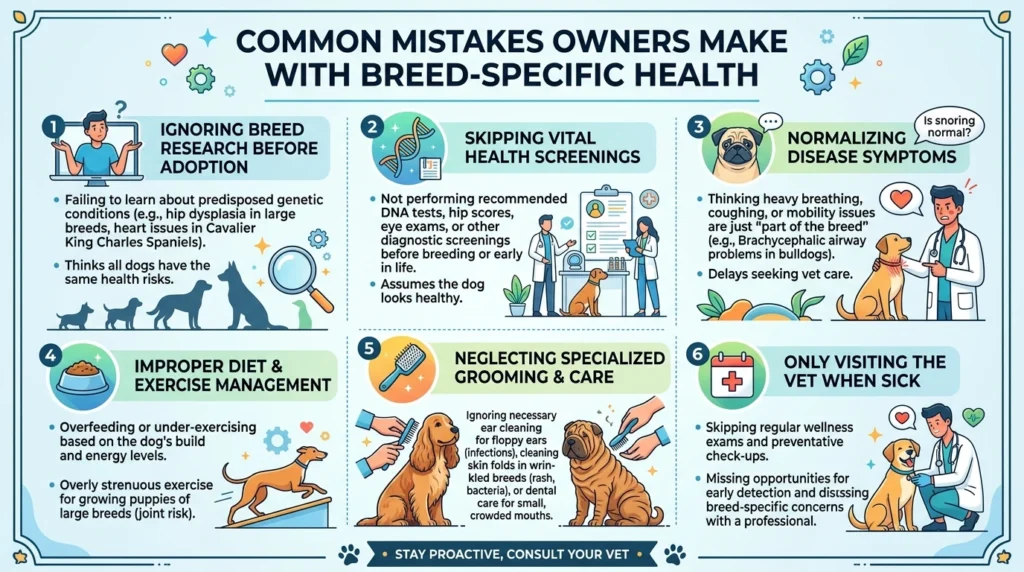
Mistake 1 Treating All Dogs the Same
This is probably the biggest mistake I see. Many owners buy the same food, follow the same exercise routine, and skip breed-specific vet screenings entirely.
However, a Great Dane and a Chihuahua need completely different care plans. Therefore, always research your specific breed’s health profile thoroughly.
Mistake 2 Ignoring Early Warning Signs
Dogs can’t tell you when something hurts. As a result, many owners miss subtle early symptoms until the condition becomes serious and expensive to treat.
Limping after walks, for example, might seem minor. However, in a German Shepherd, it could be the first sign of hip dysplasia. Early intervention at that stage is far more effective than treatment later.
Mistake 3 Skipping Genetic Health Testing
If you’re buying a puppy from a breeder, always request health clearances for both parents. Because many breed-specific conditions are inherited, this one step dramatically reduces your puppy’s risk.
Reputable breeders test for conditions like hip dysplasia, heart defects, and eye problems before breeding. Avoid any breeder who refuses to provide these clearances.
Mistake 4 Over-Exercising Flat-Faced Breeds
French Bulldogs and Pugs look energetic. However, their restricted airways make intense exercise genuinely dangerous especially in warm weather.
Short, gentle walks in cooler parts of the day are much safer. Also, never let a brachycephalic dog exercise to the point of heavy panting. That’s a warning sign, not just normal tiredness.
Mistake 5 Neglecting Dental Care in Small Breeds
Small breed dogs develop dental disease far faster than large dogs. In fact, most small dogs show signs of gum disease by age three without regular brushing.
Daily tooth brushing is the gold standard. However, even three times per week makes a significant difference. Dental chews and water additives also help but they don’t replace brushing.
Frequently Asked Questions Dog Health Problems by Breed
1. Which dog breed has the most health problems?
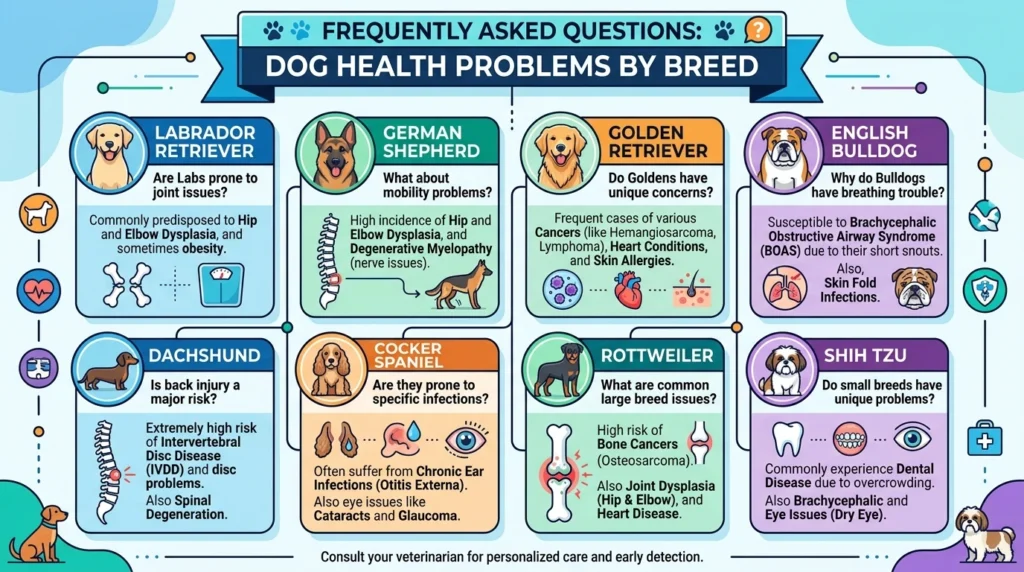
Flat-faced breeds like French Bulldogs, Pugs, and English Bulldogs are generally considered the most health-challenged. Their anatomy creates breathing difficulties, eye problems, and spinal issues. However, large breeds like Great Danes and Boxers also face serious cardiac and joint conditions. In addition, highly inbred show lines of many breeds carry heavier genetic disease burdens than working or mixed-breed lines. Consulting your vet about your specific breed’s risk profile is always the most reliable starting point.
2. How do I find out what health problems my dog’s breed is prone to?
Start with the American Kennel Club website (akc.org), which lists breed-specific health concerns for every recognized breed. Also, breed-specific clubs often publish detailed health surveys based on thousands of dogs. Your vet is another excellent resource they see breed-specific patterns every day in their practice. In addition, genetic testing companies like Embark provide breed-specific health risk reports based on your individual dog’s DNA.
3. Can mixed breed dogs avoid breed-specific health problems?
Mixed breed dogs do benefit from what’s called “hybrid vigor” , a broader genetic diversity that reduces the concentration of inherited diseases. However, a mixed breed dog that carries genes from a German Shepherd and a Golden Retriever could still inherit hip dysplasia from either parent. Therefore, mixed breed dogs aren’t automatically healthy; they just have a statistically lower risk of specific inherited conditions compared to purebred dogs from narrow gene pools.
4. At what age do breed-specific health problems typically appear?
This varies significantly by condition and breed. Hip dysplasia, for example, may show symptoms as early as four months in severe cases or not until middle age in milder cases. Cancer in Golden Retrievers typically appears in middle to senior years, around age six to ten. Breathing problems in flat-faced breeds are usually present from puppyhood. Because of this variation, regular vet screenings throughout your dog’s life, not just in old age, are genuinely important for catching problems at the most treatable stage.
5. What can I do to prevent breed-specific health problems in my dog?
Prevention starts with choosing a reputable breeder who tests for genetic conditions. After that, maintaining a healthy weight is one of the single most impactful things you can do. Obesity worsens almost every breed-specific condition from joint disease to heart problems. Regular vet check-ups, breed-appropriate exercise levels, quality nutrition, and dental care all contribute significantly. Finally, learning your breed’s specific warning signs means you catch problems early, when treatment is most effective and least expensive.
6. Are some dog health problems preventable through diet alone?
Diet plays a meaningful supporting role in many breed-specific conditions. For example, joint supplements containing glucosamine and omega-3 fatty acids help large breeds maintain healthier joints. Weight management through appropriate feeding prevents obesity-related complications across almost every breed. However, diet alone can’t prevent genetically inherited conditions like hip dysplasia or cardiac disease. Think of nutrition as one important tool in a broader prevention strategy not a complete solution on its own. Always consult your vet before adding supplements to your dog’s diet.
Conclusion Know Your Breed, Protect Your Dog
Understanding dog health problems by breed is one of the most valuable things you can do as a dog owner. Your dog can’t research their own risks but you can. And that knowledge genuinely changes outcomes.
Start by learning your specific breed’s top three health concerns. Then schedule breed-appropriate vet screenings, maintain a healthy weight, and watch for early warning signs.
In my experience, the most proactive dog owners have the healthiest, longest-lived dogs. Prevention is always easier than treatment and your dog deserves every advantage you can give them.