
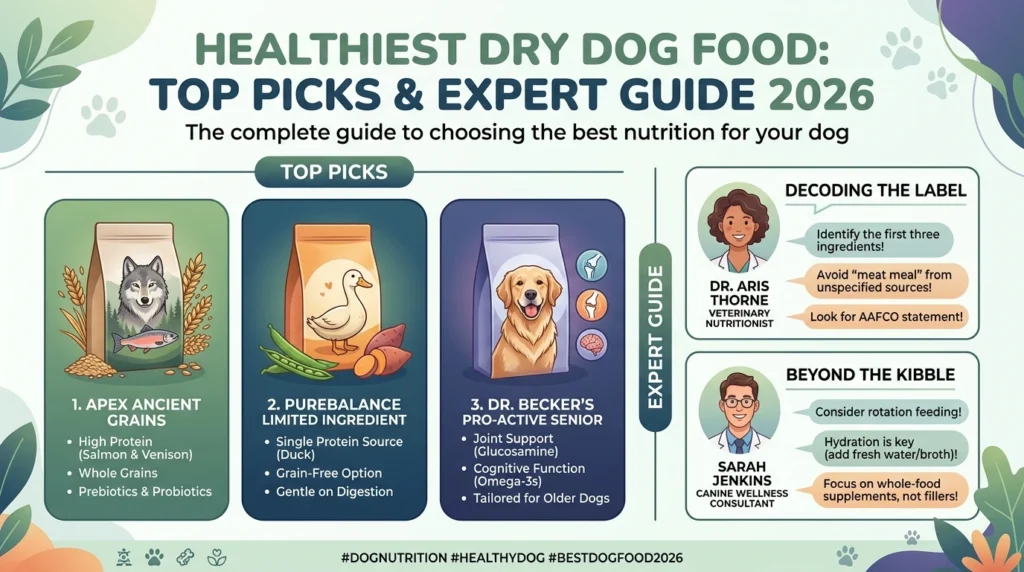
Introduction
Your dog eats the same food every single day. That means choosing the healthiest dry dog food is one of the biggest health decisions you’ll ever make for your pet.
However, the pet food aisle is overwhelming. Every bag claims to be “natural,” “premium,” or “vet-approved.” So how do you actually know what’s healthy?
In my experience, most dog owners pick food based on the front of the bag. That’s a mistake. The real information is hidden on the back in the ingredient list and nutritional panel.
This guide cuts through the confusion. You’ll learn exactly what makes dry dog food genuinely healthy, which brands consistently deliver on that promise, and how to read a label like a pro. Let’s get your dog eating better starting today.
What Makes the Healthiest Dry Dog Food Truly Healthy?
Not all kibbles are created equal. Therefore, understanding what separates a genuinely healthy formula from a cleverly marketed one is essential.
High-Quality Protein Comes First
Dogs are primarily carnivores. As a result, their bodies thrive on animal protein. The healthiest dry dog food always lists a named animal protein as the very first ingredient.
Look for specific names like:
- Chicken
- Beef
- Salmon
- Turkey
- Lamb
Avoid vague terms like “poultry,” “meat meal,” or “animal protein.” These are less accountable and harder to trace. A named protein source tells you exactly what went into that bag.
Digestibility Matters More Than Ingredients Alone
A food can look great on paper but still deliver poor nutrition. However, if your dog can’t digest it properly, those nutrients go to waste.
You can observe digestibility easily. Dogs on highly digestible food produce smaller, firmer stools. If your dog produces enormous loose stools, the food isn’t being efficiently used by their body.
Healthy Fats Support Brain, Coat, and Joints
Fat isn’t something to fear in dog food. In fact, it’s essential for good health. Specifically, omega-3 fatty acids from fish oil support brain function, reduce inflammation, and dramatically improve coat shine.
Look for these healthy fat sources on the label:
- Fish oil
- Salmon oil
- Flaxseed oil
- Chicken fat (named)
Also, check for DHA and EPA specifically mentioned on the label. These are the most bioavailable forms of omega-3 for dogs.
What “Healthy” Specifically Excludes
The healthiest dry dog food always avoids these ingredients:
- BHA, BHT, ethoxyquin synthetic preservatives with safety concerns
- Artificial colors like Red 40 or Yellow 5 zero nutritional value
- Corn syrup added sugar that causes blood sugar spikes
- Unnamed protein sources “meat by-product meal” without a named species
- Excessive grain fillers when corn or wheat dominates the top ingredients
How to Choose the Healthiest Dry Dog Food: Step-by-Step Guide

Here’s exactly how I evaluate any dry dog food. First, ignore the front of the bag completely. Then, follow these steps on the back label.
Step-by-Step Label Reading System
- Read the first five ingredients immediately. These represent the bulk of the formula. Look for at least one named protein in the top two positions.
- Find the AAFCO statement. This small line confirms the food meets nutritional standards. Better still, look for “complete and balanced based on feeding trials” not just “formulated to meet” standards.
- Check protein and fat percentages. For healthy adult dogs, look for at least 22–26% protein and 10–15% fat on the guaranteed analysis panel.
- Scan for red flag ingredients. BHA, BHT, artificial colors, corn syrup, and unnamed proteins are all reasons to put the bag back on the shelf.
- Look for omega-3 sources. Fish oil or salmon oil in the ingredients signals a commitment to coat and joint health.
- Check the kibble size. Large breed dogs need bigger kibble. Small breeds need smaller pieces that fit comfortably in tiny mouths.
- Research the brand’s recall history. Spend two minutes at fda.gov searching the brand name. A pattern of recalls signals quality control problems worth avoiding.
- Calculate cost per day not cost per bag. A $65 premium bag lasting 45 days costs less per day than a $32 budget bag lasting 20 days.
Pro Tip: Take a photo of your dog’s current food bag before shopping. Having the exact formula name, protein percentage, and ingredient list on hand makes comparing alternatives much easier in the aisle.
[Refrigerated Dog Food Walmart: Best Fresh Picks 2026]
Healthiest Dry Dog Food Options in 2026: Honest Comparisons
Here’s how the most nutritionally solid options compare across key health criteria:
| Brand & Formula | Protein Source | Omega-3 Source | Artificial Additives | Feeding Trial Data | Best For |
| Purina Pro Plan Adult | Chicken | Fish oil | None | Yes | Overall health, everyday nutrition |
| Hill’s Science Diet Adult | Chicken meal | Flaxseed | None | Yes | Clinically validated nutrition |
| Purina Pro Plan Sensitive | Salmon | Fish oil | None | Yes | Sensitive skin and digestion |
| Orijen Original | Free-run chicken | Whole fish | None | Limited | Maximum ingredient quality |
| Royal Canin Breed Specific | Chicken by-product | Fish oil | None | Yes | Breed-targeted precision |
| Purina ONE Adult | Chicken | Fish oil | None | Some | Mid-range health value |
| Wellness Complete Health | Deboned chicken | Salmon oil | None | Limited | Holistic whole-body health |
My Top Picks Explained Simply
For overall daily health Purina Pro Plan Adult
Real chicken leads to this formula. Also, prebiotic fiber supports digestive health and live probiotics appear in select versions. Vets recommend it more consistently than almost any other commercial dog food. The research depth behind it is genuinely unmatched at this price point.
For sensitive skin and digestion Purina Pro Plan Sensitive Skin & Stomach
Salmon provides natural DHA and EPA omega-3s. Additionally, the rice base is gentle and easily digestible. In my experience, dogs that have struggled on other foods often show remarkable improvement within three to four weeks on this formula.
For maximum ingredient quality Orijen Original
Around 85% of ingredients come from animal sources: free-run poultry, wild-caught fish, and cage-free eggs. However, the price tag is significantly higher than mainstream options. For owners who prioritize ingredient quality above all else, Orijen delivers.
For aging dogs Hill’s Science Diet Senior 7+
Lower calorie density prevents weight gain in less active senior dogs. Furthermore, added glucosamine and chondroitin support aging joints. If your dog is seven or older and still eating a regular adult formula, this conversation with your vet is worth having soon.
Common Mistakes That Make Dry Dog Food Less Healthy
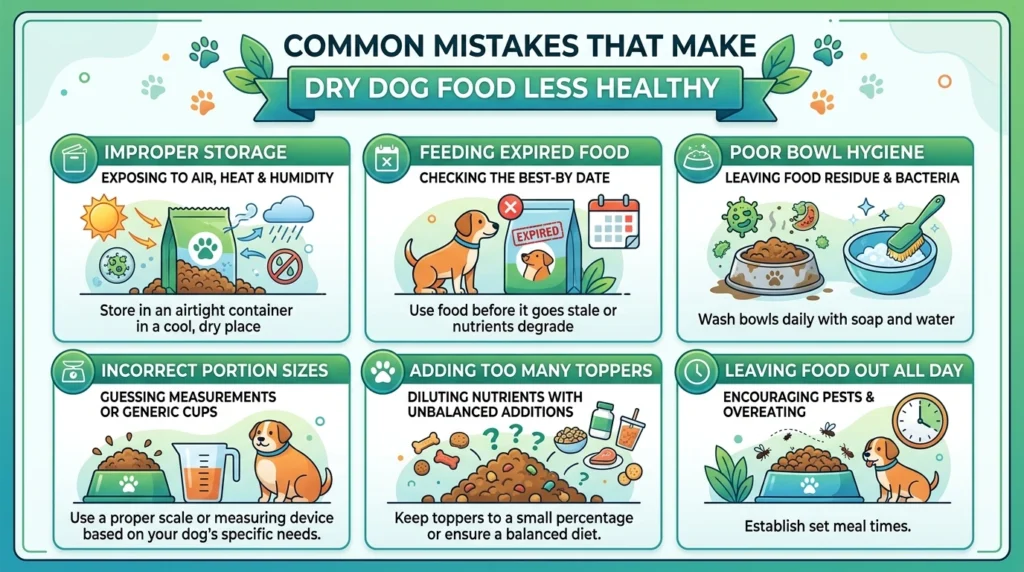
Even well-intentioned dog owners make these errors regularly. Therefore, knowing them in advance saves your dog from unnecessary nutritional gaps.
Mistake 1: Believing Grain-Free Means Healthier
Grain-free marketing has been remarkably effective. However, nutritional science doesn’t support the idea that grains harm most dogs. Since 2018, the FDA has been investigating a potential link between grain-free diets especially those high in peas and lentils and dilated cardiomyopathy (DCM) in dogs.
Unless your vet has specifically recommended grain-free for a diagnosed sensitivity, grain-inclusive formulas are the safer, more scientifically supported choice.
Mistake 2: Choosing Based on Front-of-Bag Language
“Natural,” “holistic,” “premium,” and “human-grade” are largely unregulated terms in pet food. Therefore, they carry no guaranteed nutritional meaning. A food can use all of these terms and still be nutritionally inferior to a plain-packaged mainstream brand with extensive research backing.
Always read the actual ingredient list instead.
Mistake 3: Overfeeding Because “It’s Healthy”
Premium dry dog food is often more calorie-dense and more digestible than budget options. As a result, your dog needs less of it per meal. Feeding the same volume as a cheaper food leads to gradual weight gain. Always follow the feeding guidelines and adjust based on your dog’s body condition.
Mistake 4: Switching Brands Too Frequently
Constant switching disrupts your dog’s gut microbiome. Also, it makes it nearly impossible to assess whether any food truly works for your dog. Find a quality food your dog thrives on then stick with it unless there’s a medical reason to change.
Mistake 5: Ignoring the Transition Period
Switching food abruptly even to a healthier option causes digestive upset. Always transition gradually over seven to ten days. Start with 25% new food mixed with 75% old food, then slowly shift the ratio every few days.
Pro Tip: Keep a simple two-week log when switching to a healthier food. Note your dog’s stool quality, coat condition, energy levels, and appetite daily. This tells you far more than any ingredient label about whether the food genuinely suits your dog.
Frequently Asked Questions About the Healthiest Dry Dog Food
1. What ingredients make dry dog food the healthiest option?
The healthiest dry dog foods share several key features. First, a named animal protein leads the ingredient list. Second, omega-3 fatty acids from fish oil support coat and brain health. Third, antioxidant-rich whole foods like blueberries or sweet potatoes provide natural vitamins. Finally, an AAFCO feeding trial statement confirms real dogs thrived on the food. Also, no artificial preservatives, colors, or unnamed protein sources should appear anywhere in the formula.
2. Is the healthiest dry dog food always the most expensive?
No and this is an important point for budget-conscious owners. Some excellent dry dog foods like Purina Pro Plan and Purina ONE deliver outstanding health value at mid-range prices. The research backing and quality control behind Purina Pro Plan puts it among the healthiest commercially available kibbles regardless of price comparison. However, there is generally a correlation between price and ingredient quality as you move from budget to premium tiers. Therefore, calculate cost per day rather than comparing bag prices alone.
3. How do I know if my dog’s current food is actually healthy?
Look for these positive signs over an eight to twelve week period. First, check for firm, well-formed stools in appropriate volume. Then, look for a shiny and healthy coat without excessive shedding. Also, watch for stable and appropriate body weight without unexplained changes. Finally, consistent energy appropriate for your dog’s age is a strong positive signal. If you see chronic loose stools, dull coat, low energy, or persistent skin issues, consult your vet and review the current food together.
4. Is grain-free dry dog food healthier than grain-inclusive options?
For most dogs no. Grain-free marketing is persuasive, however, the science doesn’t support avoiding grains for most healthy dogs. Many dogs digest grains well, and grains provide useful energy, fiber, and B vitamins. More importantly, the FDA has been investigating a potential link between grain-free diets and dilated cardiomyopathy (DCM) since 2018. Therefore, unless your vet has specifically recommended grain-free for a diagnosed grain sensitivity, grain-inclusive formulas are the healthier default choice for the majority of dogs.
5. What’s the healthiest dry dog food for dogs with allergies?
Identifying a food allergy requires a veterinary-supervised elimination diet not trial and error. The most common food allergens in dogs are specific proteins like beef, chicken, dairy, and wheat. Once an allergen is identified, a limited-ingredient diet with a single novel protein works best. Purina Pro Plan Sensitive Skin & Stomach (Salmon & Rice) and Hill’s Science Diet Sensitive Stomach & Skin are both widely recommended starting points. However, always work with your vet to properly diagnose and manage food allergies rather than self-diagnosing based on symptoms alone.
6. How should I store dry dog food to keep it healthy?
Proper storage directly affects nutritional quality. Keep kibble in its original bag the inner lining protects against moisture, light, and oxygen clipped shut inside an airtight hard container. Store in a cool, dry place away from direct sunlight and heat. Never pour food directly into a plastic bin without the bag, as fat residue builds up and goes rancid faster. Once opened, aim to finish the bag within six weeks for optimal freshness and nutritional integrity.
7. Can I mix wet food with the healthiest dry dog food?
Yes and many vets actually support this approach. Adding a small amount of wet food to dry kibble improves palatability for picky eaters, adds moisture to the diet, and makes mealtime more enjoyable. However, always adjust total portion sizes so you’re not overfeeding when mixing. Use the feeding guidelines on both packages, and reduce the kibble amount slightly when adding wet food. Also, consult your vet if your dog has weight management concerns before making significant dietary changes.
A Healthier Bowl Makes a Healthier Dog
Choosing the healthiest dry dog food is one of the most consistent acts of care you can offer your dog. Every single day, that bowl either builds better health or quietly undermines it.
Start with the ingredient list. Look for a named protein first. Check for omega fatty acids. Verify the AAFCO feeding trial statement. Avoid artificial additives and mystery protein sources. Then give the food a genuine eight to twelve week trial before evaluating the results.
Brands like Purina Pro Plan, Hill’s Science Diet, and Wellness Complete Health consistently deliver nutrition worth trusting. However, your vet’s personalized recommendation for your specific dog is always the most valuable guidance of all.