Introduction
Your dog can’t tell you when something feels wrong. That’s the hardest part of being a dog owner. One day they’re bouncing off the walls, and the next they’re quiet, lethargic, or refusing food. Sound familiar?
Understanding common dog health problems and solutions is one of the most valuable things you can do as a pet parent. Because catching a problem early genuinely makes a huge difference in your dog’s recovery, comfort, and even their lifespan.
In my experience, most dog health issues fall into predictable patterns. Therefore, learning to recognize symptoms early puts you miles ahead. This guide covers the most common conditions, practical solutions, and clear warning signs you should never ignore. Let’s get into it.
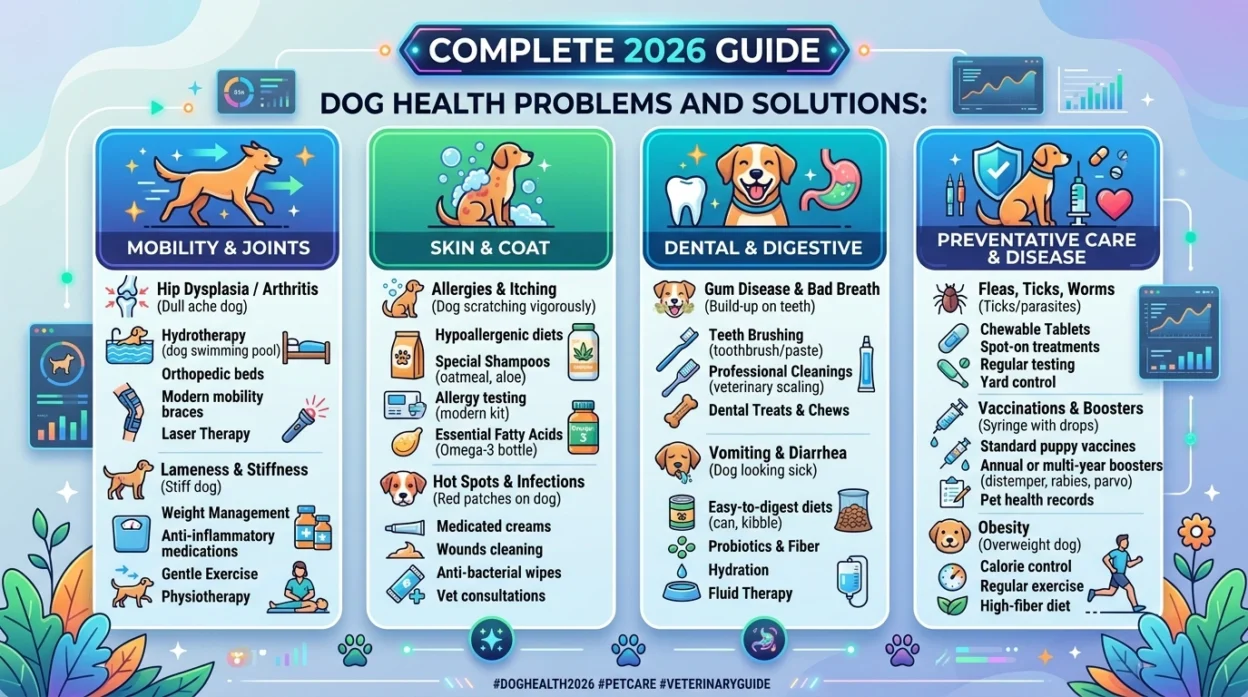
Most Common Dog Health Problems and Solutions
1. Skin Allergies and Itching
Skin problems are incredibly common in dogs. In fact, they’re one of the top reasons owners visit the vet every year.
Your dog may have a skin allergy if you notice:
- Constant scratching or licking
- Red, inflamed patches of skin
- Hair loss in certain areas
- Recurring ear infections
What causes it? Allergies can come from food, pollen, dust mites, or flea bites. Therefore, identifying the trigger is the first step toward real relief.
Solutions that work:
- Switch to a limited-ingredient diet if food allergy is suspected
- Ask your vet about antihistamines or medicated shampoos
- Use flea prevention consistently even in winter
- Add omega-3 fatty acids to your dog’s diet for skin support
Pro Tip: If your dog scratches mostly in spring and summer, seasonal pollen is likely the culprit. However, if it happens year-round, a food allergy is more probable. Always consult your vet for a proper diagnosis.
[Dogs Health Supplements: Complete Guide for 2026]
2. Ear Infections
Ever noticed your dog shaking their head repeatedly or scratching at one ear? That’s a classic sign of an ear infection.
Ear infections are extremely common especially in dogs with floppy ears like Cocker Spaniels and Basset Hounds. However, any breed can develop them.
Common symptoms include:
- Head shaking or tilting
- Redness or swelling inside the ear
- Dark discharge or unusual smell
- Whining when the ear is touched
Why do they happen? Moisture trapped in the ear canal creates the perfect environment for bacteria and yeast. As a result, dogs who swim frequently are especially prone.
Solutions:
- Clean your dog’s ears regularly with a vet-approved solution
- Dry ears thoroughly after swimming or bathing
- Never insert cotton swabs deep into the ear canal
- Visit your vet for antibiotic or antifungal ear drops when needed
3. Dental Disease
Here’s a fact that shocks most dog owners: by age three, about 80% of dogs show signs of dental disease. That’s a staggering number.
Dental problems don’t just affect your dog’s mouth. Because bacteria from infected gums can enter the bloodstream, they can also damage the heart, kidneys, and liver over time.
Warning signs to watch for:
- Bad breath that’s noticeably worse than usual
- Yellow or brown tartar buildup on teeth
- Bleeding or swollen gums
- Dropping food or chewing on one side only
Solutions:
- Brush your dog’s teeth at least three times per week
- Offer dental chews approved by the Veterinary Oral Health Council (VOHC)
- Schedule professional dental cleanings annually
- Feed dry kibble, which provides mild mechanical cleaning
4. Obesity and Weight Problems
This one is a growing problem, no pun intended. Obesity affects over 50% of dogs in the US, according to veterinary surveys. Yet many owners don’t realize their dog is overweight until a vet brings it up.
Carrying extra weight puts serious strain on your dog’s joints, heart, and respiratory system. Therefore, maintaining a healthy weight isn’t just about looks, it’s about quality and length of life.
Signs your dog may be overweight:
- You can’t easily feel their ribs
- They tire quickly during walks
- They have a rounder belly with no visible waist
- They’re reluctant to exercise or play
Solutions:
- Measure every meal don’t guess portions
- Cut back on treats, which add hidden calories fast
- Increase daily exercise gradually even short walks help
- Ask your vet about a weight management food formula
Pro Tip: Replace high-calorie treats with small pieces of carrot, cucumber, or blueberries. Dogs love them, and they’re much lower in calories than commercial treats.
How to Prevent Dog Health Problems: Step-by-Step Guide

Prevention is always better than treatment. Here’s a simple, practical routine to protect your dog’s health year-round.
Step 1 Schedule Regular Vet Visits
Annual check-ups catch problems before they become serious. Therefore, even if your dog seems perfectly healthy, don’t skip routine appointments. Senior dogs (7+) benefit from visits every six months.
Step 2 Stay Current on Vaccinations and Parasite Prevention
Core vaccines protect against life-threatening diseases like distemper, parvovirus, and rabies. In addition, monthly flea, tick, and heartworm prevention is non-negotiable especially in warmer climates.
Step 3 Feed a High-Quality Diet
Food is medicine. A balanced, age-appropriate diet supports immune function, coat health, joint health, and energy levels. Choose foods with named protein sources and AAFCO nutritional adequacy statements.
Step 4 Exercise Daily
Physical activity keeps joints flexible, weight managed, and minds stimulated. Even a 20-minute walk twice daily makes a measurable difference for most dogs.
Step 5 Monitor for Changes
You know your dog better than anyone. Therefore, trust your instincts when something seems off. Changes in appetite, energy, bathroom habits, or behavior are often the earliest signs of health issues.
Step 6 Maintain Dental and Grooming Hygiene
Regular brushing, nail trims, ear cleaning, and dental care prevent many common issues from developing in the first place.
Dog Health Problems Comparison: Symptoms and Solutions at a Glance
Here’s a quick reference table to help you identify common issues and their solutions fast.
| Health Problem | Key Symptoms | First Action | Vet Needed? |
| Skin Allergies | Itching, redness, hair loss | Change diet, check for fleas | Yes for diagnosis |
| Ear Infections | Head shaking, discharge, smell | Clean ears, keep dry | Yes for medication |
| Dental Disease | Bad breath, tartar, bleeding gums | Start brushing teeth | Yes annual cleaning |
| Obesity | Can’t feel ribs, low energy | Measure food, increase walks | Yes weight plan |
| Joint Problems | Limping, stiffness, slow to rise | Reduce high-impact exercise | Yes X-rays needed |
| Digestive Upset | Vomiting, diarrhea, gas | Bland diet (rice + chicken) | If lasting 48+ hours |
| Eye Infections | Discharge, redness, squinting | Gently clean with warm cloth | Yes antibiotics |
| Anxiety | Excessive barking, destructive behavior | Identify triggers, add routine | If severe |
Common Mistakes Dog Owners Make With Health Problems

Waiting Too Long to See the Vet
This is the biggest mistake and the most understandable one. Nobody wants to overreact. However, symptoms like labored breathing, blood in urine, sudden weight loss, or collapse require immediate veterinary attention.
Giving Human Medications
Never give your dog ibuprofen, acetaminophen, or other human pain relievers. These are toxic to dogs even in small amounts. Always consult your vet before giving any medication.
Ignoring Dental Health
Most owners focus on food, exercise, and vaccines but skip dental care entirely. Because dental disease progresses silently, many dogs suffer for months before owners notice anything wrong.
Overfeeding “Just Because They Ask”
Dogs are masters at looking hungry. However, consistently overfeeding even by small amounts leads to obesity and all the health problems that come with it. Stick to measured portions.
Self-Diagnosing With Internet Searches
Online research has its place but it can also send you down anxiety-inducing rabbit holes. Use information to prepare good questions for your vet, not to replace professional diagnosis.
Pro Tip: Keep a simple health journal for your dog. Note any changes in appetite, energy, bathroom habits, coat condition, or behavior. This information is incredibly useful for your vet and helps you spot patterns over time.
Frequently Asked Questions About Dog Health Problems and Solutions
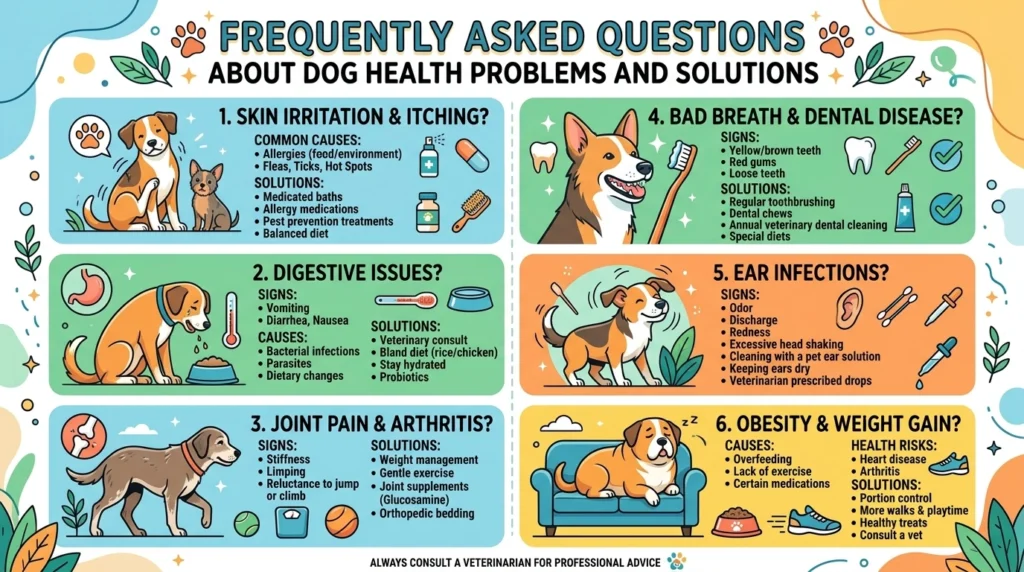
1. What are the most common dog health problems owners should know about?
The most frequently seen dog health problems include skin allergies, ear infections, dental disease, obesity, joint problems (especially in large breeds), digestive upset, eye infections, and anxiety. Many of these conditions are preventable with regular vet visits, a quality diet, proper exercise, and good hygiene habits. Early detection dramatically improves outcomes for almost every condition. Therefore, knowing the warning signs for each issue is genuinely valuable for every dog owner.
2. How do I know if my dog’s health problem needs an emergency vet visit?
Certain symptoms require immediate veterinary attention and don’t wait for a regular appointment. These include: difficulty breathing, collapse or inability to stand, seizures, uncontrolled bleeding, suspected poisoning, bloated or hard abdomen, loss of consciousness, or blood in vomit or urine. When in doubt, always call your vet or an emergency animal hospital. It’s always better to be safe when your dog’s life could be at risk.
3. Can dog health problems be prevented with diet alone?
Diet plays a huge role in your dog’s overall health but it’s one part of a larger picture. A high-quality, nutritionally complete diet supports immune function, coat health, weight management, and even joint health. However, prevention also requires regular exercise, routine vet visits, vaccinations, parasite control, and good dental hygiene. No single factor prevents all health problems. Therefore, a well-rounded approach gives your dog the best chance at a long, healthy life.
4. What are the signs of joint problems in dogs?
Joint problems particularly arthritis and hip dysplasia are very common in older dogs and large breeds. Key signs include limping or favoring one leg, stiffness after resting (especially in the morning), reluctance to climb stairs or jump, visible swelling around joints, and personality changes like increased irritability. If you notice these signs, consult your vet promptly. Early intervention with anti-inflammatory medications, joint supplements, controlled exercise, and weight management can significantly slow progression and improve comfort.
5. How often should I take my dog to the vet for health check-ups?
For healthy adult dogs between one and seven years old, an annual wellness exam is generally recommended. Puppies need more frequent visits typically every three to four weeks until four months old for their vaccination series. Senior dogs (seven years and older) benefit from check-ups every six months, because age-related conditions develop more quickly and are easier to manage when caught early. Dogs with known health conditions may need more frequent monitoring. Your vet will advise on the right schedule for your specific dog.
6. Are some dog breeds more prone to health problems than others?
Yes certain breeds carry genetic predispositions to specific conditions. French Bulldogs and Pugs are prone to breathing difficulties due to their flat faces. German Shepherds and Labrador Retrievers commonly develop hip dysplasia. Cocker Spaniels frequently suffer from ear infections. Dachshunds are susceptible to spinal problems. However, mixed-breed dogs often benefit from genetic diversity that reduces some inherited risks. Knowing your dog’s breed-specific health risks helps you watch for early signs and take preventive steps with your vet’s guidance.
7. What home remedies are safe for minor dog health issues?
For mild digestive upset, a bland diet of plain boiled chicken and white rice for 24 to 48 hours is widely recommended by veterinarians. Warm compresses can soothe minor eye discharge before a vet visit. Oatmeal baths (using plain, unflavored oatmeal) can temporarily relieve mild skin irritation. However, always consult your vet before trying home treatments because some symptoms that seem minor can indicate more serious underlying conditions that need professional diagnosis and treatment.
Take Action for Your Dog’s Health Today
Understanding common dog health problems and solutions puts you in a genuinely powerful position as a pet owner. You don’t need a veterinary degree to spot early warning signs, you just need to know what to look for.
The most important habits are simple: schedule regular vet visits, feed a quality diet, exercise your dog daily, maintain dental hygiene, and trust your instincts when something seems off.
Your dog gives you unconditional love every single day. Protecting their health is one of the most meaningful ways to love them back. Start with one small improvement today whether that’s booking that overdue vet check-up or adding a teeth-brushing routine this week.