Introduction
Your dog can’t tell you when something feels wrong. That’s a scary thought, isn’t it? As a dog owner, knowing the most important dog’s health facts is one of the most powerful things you can do for your furry companion.
Many owners love their dogs deeply yet miss early warning signs simply because they didn’t know what to look for. The good news is that understanding basic dog health doesn’t require a veterinary degree. It just requires the right information.
In this guide, you’ll discover fascinating and genuinely useful dog health facts. You’ll learn how your dog’s body works, what signs to watch for, and how simple daily habits can add years to your dog’s life. Let’s get started.
Amazing Dogs Health Facts You Probably Didn’t Know
Dogs are remarkable animals. Their bodies work in ways that still surprise scientists and vets alike. Here are some genuinely fascinating health facts about dogs that every owner should understand.
Your Dog’s Heart Works Hard Every Day
A healthy adult dog’s heart beats between 60 and 140 times per minute. Smaller breeds tend to have faster heart rates than larger breeds. Therefore, if you notice your dog breathing heavily at rest, that’s worth a vet visit.
Dogs Have a Unique Sense of Smell
Your dog’s nose contains around 300 million scent receptors. Humans have only about 6 million. As a result, dogs can detect diseases including certain cancers and diabetes through smell alone. That’s not a myth. It’s a documented medical fact.
Their Normal Body Temperature Is Higher Than Yours
A healthy dog’s body temperature ranges from 101°F to 102.5°F (38.3°C to 39.2°C). However, anything above 104°F signals a dangerous fever. Knowing this fact can genuinely save your dog’s life in an emergency.
Dogs Age Faster Than You Think
The old “1 dog year = 7 human years” rule is actually an oversimplification. In reality, dogs age rapidly in their first two years. After that, the rate slows down. Large breeds also age faster than small breeds so their senior care needs start earlier.
Their Gut Health Affects Everything
Just like humans, dogs have a gut microbiome. This affects their immune system, mood, digestion, and even their skin. Therefore, feeding your dog a balanced, high-quality diet isn’t just about nutrition, it’s about whole-body health.
Key Dogs Health Facts About Common Health Issues
Why Early Detection Changes Everything
Catching a health problem early makes a massive difference. In my experience, the dog owners who schedule regular vet checkups even when everything seems fine almost always catch issues before they become serious. Prevention is always better than treatment.
Most Common Health Problems in Dogs
Here are the health issues vets see most frequently:
- Dental disease affects over 80% of dogs by age three
- Obesity impacts nearly 56% of dogs in the US
- Ear infections especially common in floppy-eared breeds
- Skin allergies triggered by food, environment, or fleas
- Arthritis affects many dogs over seven years old
- Heart disease more common in older and certain breeds
- Parasites including fleas, ticks, and intestinal worms
Signs Your Dog Might Be Unwell
Watch closely for these warning signs:
- Sudden loss of appetite lasting more than 24 hours
- Excessive thirst or urination
- Unusual lethargy or reluctance to move
- Vomiting or diarrhea that doesn’t resolve quickly
- Swollen abdomen or obvious pain when touched
- Difficulty breathing or persistent coughing
- Changes in coat condition dullness, excessive shedding, or bald patches
If you notice any of these signs, consult your vet promptly. Don’t wait and hope it improves on its own.
Pro Tip: Take a quick 30-second video of any unusual symptom your dog shows. Showing your vet a video is far more helpful than describing it from memory especially for intermittent issues like limping or coughing.
How to Use These Dogs Health Facts to Keep Your Dog Thriving

Knowing health facts is useful. Applying them daily is where the real difference happens. Here’s a practical step-by-step approach to keeping your dog in peak health.
Step-by-Step Daily Health Routine
- Check your dog’s eyes every morning. Healthy eyes are bright and clear. Discharge, redness, or cloudiness can indicate infection or other issues.
- Inspect their coat and skin during petting. Run your hands through their fur regularly. Feel for lumps, bumps, sores, or areas of tenderness your dog reacts to.
- Monitor food and water intake daily. Sudden changes in eating or drinking habits are often the first sign something is wrong. Also, always provide fresh, clean water throughout the day.
- Check their gums once a week. Healthy gums are pink and moist. Pale, white, yellow, or bluish gums are emergencies to get to a vet immediately.
- Watch their bathroom habits. Changes in stool consistency, color, or frequency tell you a lot about gut and overall health.
- Exercise them appropriately every day. Regular exercise maintains a healthy weight, supports joint health, and boosts mental wellbeing. The amount needed varies by breed and age.
- Schedule vet checkups twice a year. Annual visits are a minimum. However, twice-yearly checkups especially for senior dogs allow vets to catch changes between visits.
[Dogs Health Issues: Signs, Causes & Solutions 2026]
Comparing Dog Life Expectancy by Size: Useful Health Facts
One of the most surprising dog health facts is how dramatically life expectancy varies by size. Here’s a helpful comparison:
| Dog Size | Average Weight | Average Lifespan | Senior Stage Begins |
| Toy/Small | Under 20 lbs | 14–16 years | Around age 10–12 |
| Medium | 20–50 lbs | 11–14 years | Around age 8–10 |
| Large | 50–90 lbs | 9–12 years | Around age 7–8 |
| Giant | Over 90 lbs | 7–10 years | Around age 5–6 |
What This Means for You
If you have a Great Dane, for example, their senior health needs start far earlier than a Chihuahua’s. Therefore, adjusting their diet, exercise, and vet visit frequency as they age matters enormously. Knowing your dog’s expected lifespan helps you plan their healthcare at every stage.
Breed-Specific Health Risks Are Real
Certain breeds carry genetic predispositions to specific conditions. For instance:
- German Shepherds prone to hip dysplasia
- Bulldogs and Pugs respiratory issues due to flat faces
- Dachshunds back problems from their long spines
- Golden Retrievers higher cancer rates than many breeds
- Boxers heart conditions and certain cancers
Knowing your breed’s specific risks helps you watch for early signs and discuss preventive care with your vet proactively.
Common Mistakes That Hurt Your Dog’s Health
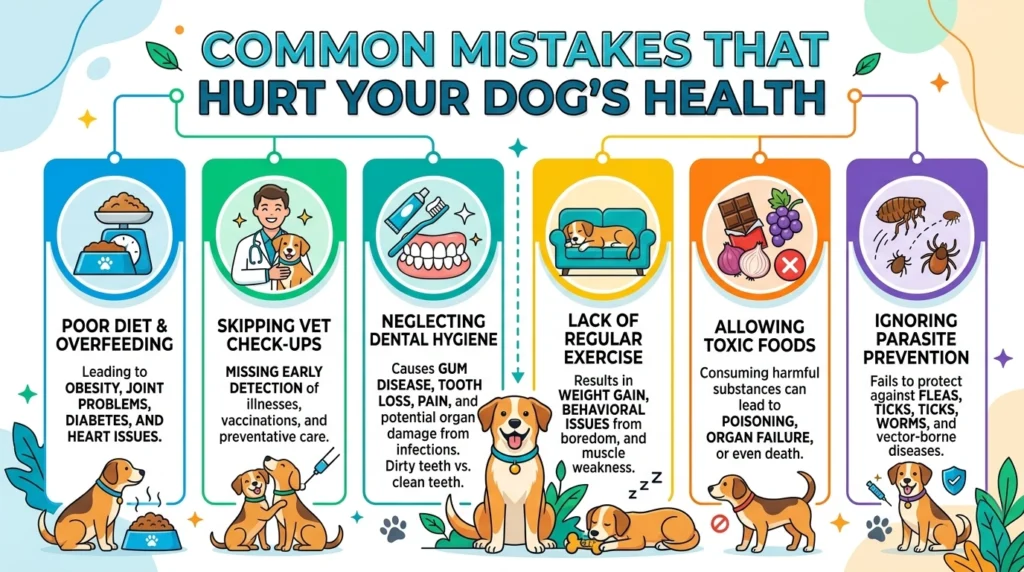
Mistake 1: Skipping Dental Care
Most dog owners focus on food, exercise, and vaccines but forget teeth entirely. However, dental disease is one of the most painful and preventable conditions dogs face. Brushing your dog’s teeth a few times per week makes an enormous difference over time.
Mistake 2: Overfeeding Without Realizing It
Obesity shortens a dog’s life significantly. It also causes or worsens diabetes, arthritis, and heart disease. Many owners genuinely don’t realize their dog is overweight because the change happens gradually. Therefore, using your vet’s body condition score chart is a smarter approach than guessing.
Mistake 3: Skipping Parasite Prevention
Fleas, ticks, and heartworms aren’t just uncomfortable, they cause serious illness. Heartworm disease, for instance, is expensive to treat and can be fatal if left undetected. Year-round prevention is far cheaper and safer than treatment.
Mistake 4: Ignoring Mental Health
Dogs experience anxiety, boredom, and depression. These conditions affect physical health too. A mentally understimulated dog often develops destructive behaviors, digestive issues, and weakened immune responses. Daily play, training, and social interaction are therefore essential, not optional extras.
Mistake 5: Waiting Too Long to See the Vet
“Let’s see if it gets better” is one of the most common and costly phrases in dog ownership. Many conditions that are simple to treat early become serious and expensive when ignored. When something seems off with your dog, trusting that instinct and calling your vet is always the right move.
Pro Tip: Keep a simple health journal for your dog. Note their weight monthly, any changes in behavior, appetite, energy, or coat condition. This gives your vet valuable context at every visit and helps you spot patterns you might otherwise miss.
Frequently Asked Questions About Dogs Health Facts
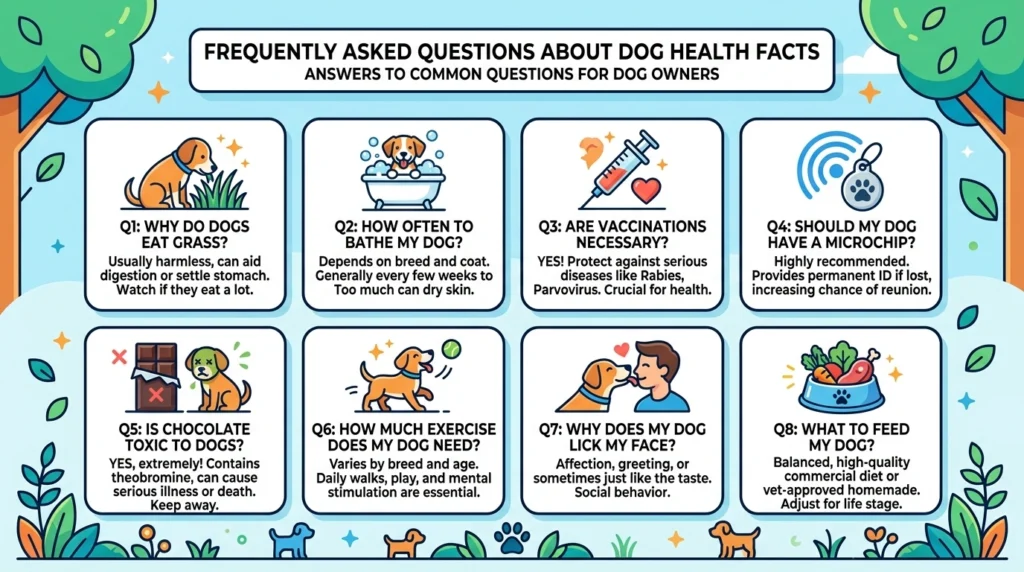
1. How often should I take my dog to the vet?
Healthy adult dogs benefit from at least one vet visit per year. However, puppies need more frequent visits in their first year for vaccinations and development checks. Senior dogs generally those over seven years old benefit most from twice-yearly checkups. More frequent visits allow vets to catch age-related changes earlier, when they’re most treatable. Always consult your vet to establish the right schedule for your specific dog’s age, breed, and health history.
2. What are the most important vaccines for dogs?
Core vaccines that every dog should receive include rabies, distemper, parvovirus, and adenovirus. These protect against serious and often fatal diseases. Additionally, depending on your dog’s lifestyle and location, your vet may recommend non-core vaccines like leptospirosis, Bordetella (kennel cough), or Lyme disease. Your vet is the best person to create the right vaccination schedule for your individual dog based on their risk factors.
3. How do I know if my dog is at a healthy weight?
A simple way to check is the rib test. Run your hands along your dog’s sides. You should feel the ribs easily without pressing hard, but they shouldn’t be visibly prominent. Also, when viewed from above, your dog should have a visible waist. From the side, their belly should tuck up slightly behind the rib cage. If you’re unsure, your vet can assess your dog’s body condition score at their next visit and give you specific guidance.
4. What human foods are dangerous for dogs?
Several common human foods are toxic to dogs. Chocolate, grapes, raisins, onions, garlic, xylitol (an artificial sweetener), macadamia nuts, and avocado are all dangerous and should never be given to dogs. Even small amounts of some of these particularly xylitol and grapes can cause serious organ damage or death. If your dog consumes any of these accidentally, contact your vet or an animal poison control helpline immediately without waiting for symptoms to appear.
5. How much exercise does my dog actually need?
Exercise needs vary significantly by breed, age, and health status. High-energy breeds like Border Collies and Huskies need 90 minutes or more of vigorous activity daily. Meanwhile, a senior Basset Hound may only need 20–30 minutes of gentle walking. As a general guideline, most healthy adult dogs benefit from at least 30–60 minutes of exercise daily. However, your vet can give you the most accurate recommendation based on your dog’s specific breed, weight, and any existing health conditions.
6. At what age is a dog considered senior?
This depends heavily on size. Small breeds generally enter their senior years around age 10–12. Medium breeds are considered senior around age 8–10. Large breeds reach senior status earlier around age 7–8. Giant breeds like Great Danes may be considered senior as early as age 5–6. Once your dog enters their senior years, more frequent vet visits, dietary adjustments, and attention to joint health become especially important for maintaining quality of life.
7. Can dogs get stressed or depressed?
Yes absolutely. Dogs experience genuine emotional states including anxiety, stress, and depression. Common signs include changes in appetite, increased sleeping, withdrawal from interaction, destructive behavior, or excessive vocalization. Major life changes like moving homes, a new baby, loss of a companion animal, or changes in routine can all trigger emotional distress in dogs. Regular exercise, mental stimulation, consistent routines, and quality time with their owner are the most effective ways to support a dog’s emotional wellbeing. If symptoms are severe or persistent, your vet can help rule out medical causes and discuss appropriate support.
Your Dog’s Health Is in Your Hands
Understanding dogs’ health facts isn’t just interesting, it’s genuinely life-changing for your pet. Every fact in this guide gives you a tool to catch problems earlier, make better daily decisions, and give your dog the longest, healthiest life possible.
Start with the basics: regular vet visits, a quality diet, daily exercise, and consistent observation of your dog’s behavior and physical condition. Small daily habits add up to years of additional healthy life for your companion.
Your dog gives you unconditional love every single day. Giving them the best possible health care in return is the most meaningful thing you can do.