
Introduction
So you’ve decided to bring a dog into your life. That’s genuinely exciting! However, one question stops almost every new owner in their tracks: how much does a dog actually cost?
The truth is, dog breeds and prices vary wildly. Some breeds cost a few hundred dollars. Others can set you back several thousand. Therefore, knowing what to expect before you start searching saves you stress, time, and money.
In my experience, many first-time buyers focus only on the purchase price. However, the real cost of owning a dog goes much deeper than that. Because every breed has different grooming needs, health issues, and food requirements, the ongoing costs matter just as much as the upfront price.
This guide covers the most popular dog breeds, their typical price ranges, and what affects the cost. By the end, you’ll know exactly which breed fits your lifestyle and your budget perfectly.
What Affects Dog Breeds and Price?
Breed Popularity Drives Prices Up
Have you ever wondered why some dogs cost five times more than others? The answer usually comes down to demand. Popular breeds like French Bulldogs and Golden Retrievers command higher prices simply because everyone wants one.
However, popularity isn’t the only factor. Breeders also consider:
- Pedigree and bloodline champion bloodlines cost significantly more
- Health testing responsible breeders test for genetic diseases, which adds to the price
- Breeder reputation established, reputable breeders charge more than backyard breeders
- Location urban areas typically have higher prices than rural regions
- Demand vs. availability rare breeds naturally cost more
Therefore, when you see a very low price for a purebred dog, that’s often a red flag. In addition, suspiciously cheap puppies may come from puppy mills with poor breeding practices.
Size and Rarity Also Matter
Smaller dogs are often more expensive than larger ones surprisingly. For example, Teacup Yorkies and Micro French Bulldogs can cost $3,000 to $10,000 because they’re harder to breed successfully.
Rare coat colors also push prices higher. A blue merle French Bulldog, for instance, costs far more than a standard fawn one. As a result, always research a breed thoroughly before assuming any price is fair.
Pro Tip: Always ask breeders for health clearances and vet records before paying any deposit. A trustworthy breeder will share these documents gladly.
Most Popular Dog Breeds and Price Ranges in 2026
A Complete Price Breakdown by Breed
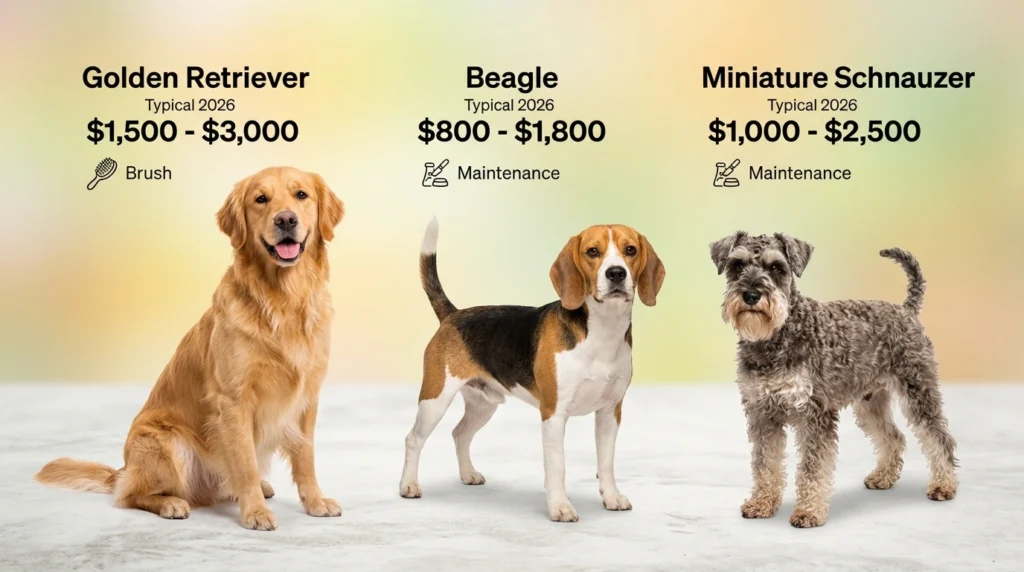
Here’s where it gets really useful. Below is a detailed comparison table showing popular dog breeds and price ranges you can expect in 2026.
| Dog Breed | Average Price Range | Size | Good For |
| French Bulldog | $2,000 – $7,000 | Small | Apartments, families |
| Golden Retriever | $1,000 – $3,500 | Large | Families, first-time owners |
| German Shepherd | $800 – $3,000 | Large | Active owners, working roles |
| Labrador Retriever | $800 – $2,500 | Large | Families, beginners |
| Dachshund | $500 – $2,000 | Small | Apartments, seniors |
| Siberian Husky | $700 – $2,500 | Medium | Active, outdoor owners |
| Pomeranian | $1,000 – $4,000 | Toy | Apartment living |
| Rottweiler | $1,500 – $4,000 | Large | Experienced owners |
| Beagle | $500 – $1,500 | Medium | Families, beginners |
| Shih Tzu | $500 – $2,500 | Small | Seniors, apartments |
| Yorkshire Terrier | $1,000 – $3,000 | Toy | Apartment, singles |
| Doberman Pinscher | $1,500 – $3,500 | Large | Active, experienced owners |
Which Breed Offers the Best Value?
Honestly, the Labrador Retriever and Beagle offer the best combination of affordability, temperament, and health. Both are beginner-friendly, generally healthy, and widely available from reputable breeders.
However, if you want a small apartment dog, a Shih Tzu or Dachshund gives you a manageable price with a loving personality. In addition, both breeds adapt well to quieter lifestyles.
How to Choose the Right Dog Breed for Your Budget

Step-by-Step Guide to Making the Right Choice
Finding the right dog isn’t just about which breed looks the cutest. Therefore, follow these practical steps before making any decisions.
- Set your total budget not just the purchase price. Include food, grooming, vet visits, training, and supplies. For example, a French Bulldog may cost $3,000 upfront but $2,000–$4,000 annually in ongoing care.
- Assess your living situation honestly. Large breeds like German Shepherds and Huskies need significant space and exercise. However, small breeds like Pomeranians and Shih Tzus thrive in apartments.
- Research breed-specific health issues. Some breeds cost more in vet bills than others. For instance, French Bulldogs and Pugs are prone to breathing problems that require expensive veterinary care.
- Consider your activity level. A Siberian Husky needs hours of daily exercise. Therefore, if you work long hours and prefer quiet evenings, a calmer breed like a Basset Hound suits you better.
- Factor in grooming costs. Long-haired breeds like Golden Retrievers and Shih Tzus need regular professional grooming. As a result, grooming costs can add $50–$100 per month to your budget.
- Decide between a puppy and an adult dog. Adult rescue dogs cost far less, sometimes just a small adoption fee. In addition, adult dogs are often already trained, which saves time and training costs.
- Visit the breeder in person before paying. A reputable breeder welcomes visits and shows you where puppies live. However, if a breeder refuses visits or only communicates online, that’s a serious warning sign.
Understanding First-Year vs. Ongoing Costs
First-year costs are always higher because you’re buying supplies, paying for initial vaccinations, spaying or neutering, and microchipping. After that first year, costs typically stabilize.
Here’s a rough breakdown of annual dog ownership costs:
- Food: $300 – $900 per year depending on breed size
- Vet visits (routine): $200 – $500 per year
- Grooming: $0 – $1,200 per year depending on breed
- Training: $100 – $500 for basic obedience classes
- Toys, bedding, accessories: $100 – $300 per year
- Pet insurance: $200 – $700 per year (highly recommended)
Therefore, always calculate the total annual cost not just the sticker price before committing to any breed.
[Dogs Cute: Why Your Dog Is the Cutest Thing Ever]
Common Mistakes to Avoid When Buying a Dog
Don’t Let Excitement Cloud Your Judgment
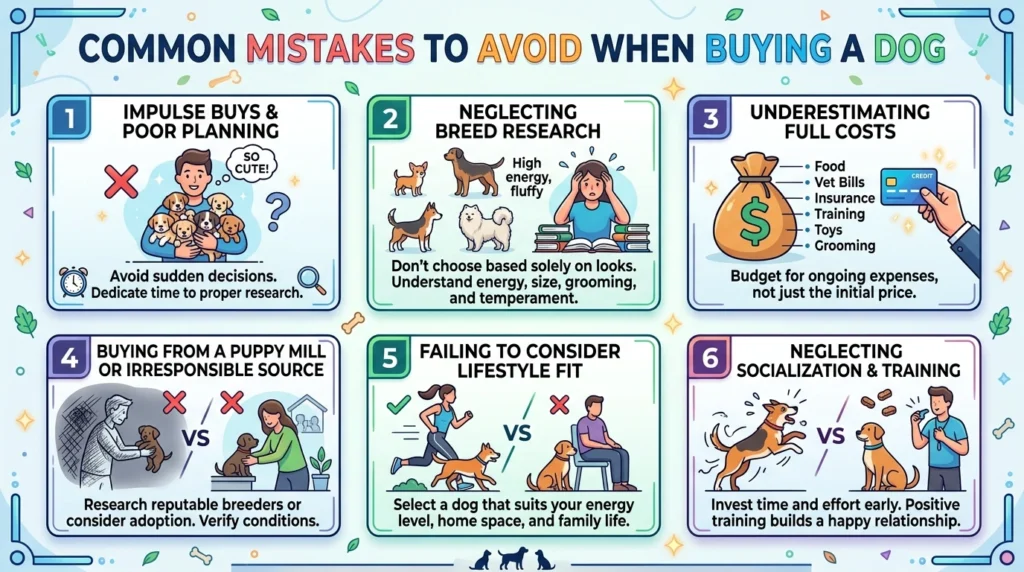
Buying a dog is emotional. However, making decisions based purely on emotion leads to costly mistakes. Here are the most common ones I’ve seen people make and how to avoid them.
Mistake 1 Buying From a Puppy Mill
Puppy mills produce dogs in poor conditions purely for profit. These puppies often have serious health and behavioral problems. As a result, you may pay a low price upfront but face thousands in vet bills later.
Always buy from a reputable breeder or adopt from a rescue. In addition, check that any breeder you use is registered with the AKC or your country’s equivalent kennel club.
Mistake 2 Ignoring Breed Temperament
A beautiful dog that doesn’t match your lifestyle creates problems for everyone. For example, Border Collies are brilliant dogs however, they need constant mental stimulation. Without it, they become destructive and anxious.
Therefore, match the breed’s energy level and temperament to your actual lifestyle, not the lifestyle you wish you had.
Mistake 3 Skipping Health Checks
Never skip health clearances. Reputable breeders test for hip dysplasia, eye conditions, heart problems, and other genetic issues. Because these tests add to the breeder’s costs, they affect the purchase price. However, paying more upfront saves enormous vet costs later.
Mistake 4 Underestimating Ongoing Costs
Many buyers focus entirely on the purchase price. However, the real financial commitment begins after you bring your dog home. Therefore, always budget for food, grooming, vet care, training, and unexpected medical expenses before buying.
Mistake 5 Buying Impulsively Online
Scam listings are everywhere online. As a result, never send money before meeting the dog and breeder in person. If a deal looks too good to be true it always is.
Pro Tip: Use the AKC Marketplace (akc.org) or your national kennel club’s breeder directory to find verified, reputable breeders in your area.
Frequently Asked Questions About Dog Breeds and Price
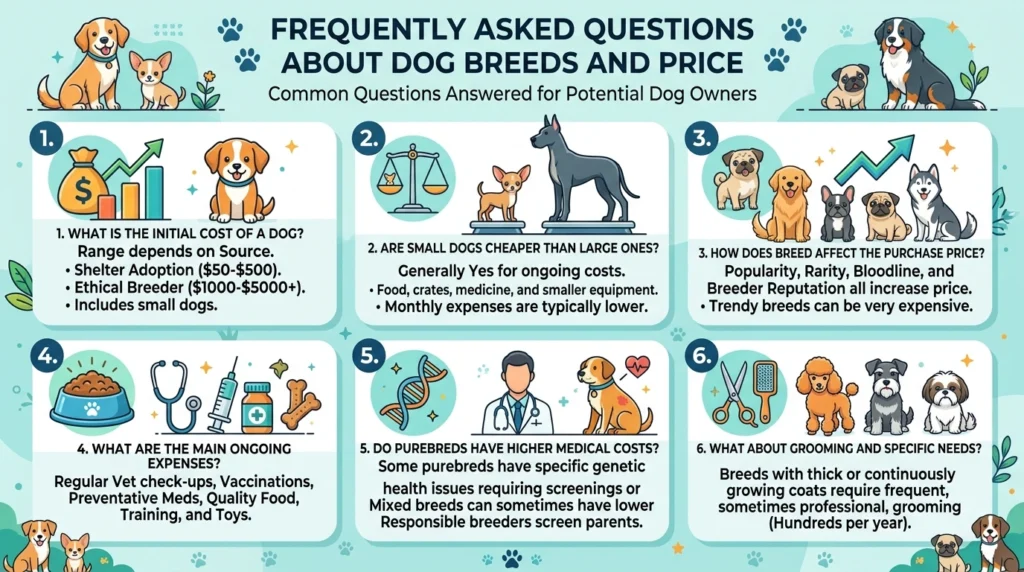
1. What is the most affordable dog breed to buy and own?
Beagles and Labrador Retrievers are among the most affordable popular breeds. Purchase prices typically range from $500 to $1,500. In addition, both breeds are generally healthy, which keeps long-term vet costs manageable. Adopting a mixed-breed dog from a rescue shelter is even more affordable. Adoption fees usually range from $50 to $300 and often include vaccinations and microchipping.
2. Why are French Bulldogs so expensive compared to other breeds?
French Bulldogs are expensive for several reasons. First, they cannot breed naturally. In most cases artificial insemination is required. Second, most French Bulldogs need cesarean sections to deliver puppies safely. As a result, breeding costs are very high, and breeders pass those costs on to buyers. In addition, their extreme popularity keeps demand and prices consistently high.
3. Is it cheaper to adopt a dog than to buy from a breeder?
Yes, adoption is significantly cheaper than buying from a breeder. Rescue organizations typically charge $50 to $500 in adoption fees. However, that fee usually covers vaccinations, microchipping, spaying or neutering, and an initial health check. Therefore, adoption provides excellent value. In addition, you’re giving a dog in need a loving home, which makes it a genuinely rewarding choice.
4. Do dog prices vary by location?
Absolutely location affects dog breeds and price significantly. Urban areas like New York City or Los Angeles generally have higher prices than rural regions. In addition, imported breeds or breeds that aren’t locally bred tend to cost more because of shipping and import costs. Therefore, expanding your search radius sometimes helps you find better prices from reputable breeders in nearby areas.
Beyond the purchase price, expect to budget for spaying or neutering ($150–$500), initial vaccinations ($100–$300), microchipping ($50), a collar and leash ($30–$100), a crate ($50–$200), food and water bowls, bedding, and toys. In addition, pet insurance is strongly recommended monthly premiums range from $20 to $60 depending on the breed and coverage level. As a result, your first-year total cost can easily reach $2,000 to $5,000 beyond the purchase price.
6. Which dog breeds are most expensive in 2026?
The priciest dog breeds currently include the French Bulldog ($2,000–$7,000), Tibetan Mastiff ($2,000–$7,000+), Chow Chow ($1,500–$4,000), Rottweiler ($1,500–$4,000), and the Samoyed ($1,500–$4,000). However, rare color variations and champion bloodlines push prices even higher in all these breeds. Therefore, always verify that high prices reflect genuine quality and health testing not just marketing.
7. Should I get pet insurance for any breed?
Yes pet insurance is worth considering for every breed, however it’s especially important for breeds prone to health issues. French Bulldogs, Pugs, and Bulldogs frequently need expensive respiratory treatments. In addition, large breeds like German Shepherds and Labradors are prone to hip dysplasia, which requires costly surgery. Therefore, investing in pet insurance early ideally when your dog is still a healthy puppy protects you from unexpected veterinary bills that can reach thousands of dollars.
Bringing It All Together
Choosing a dog is one of the best decisions you’ll ever make. However, going in without understanding dog breeds and price realities can lead to financial stress and heartbreak for both you and your new companion.
Start by setting a realistic total budget, not just the purchase price. Then research breeds that genuinely match your lifestyle, home size, and activity level. In addition, always buy from reputable breeders or adopt from a rescue shelter rather than supporting puppy mills.
The perfect dog for you is out there. With the right information and a clear budget, you’ll find a loyal companion who fits perfectly into your life and your finances.