
Introduction
Walk into any pet store, grocery store, or even your local Walmart, and you’ll spot Purina dog food within seconds. It’s everywhere. And with good reason Purina has been feeding dogs for nearly a century, and they’ve built one of the most trusted names in pet nutrition along the way.
But here’s the thing Purina isn’t just one product. It’s an entire universe of dog food lines, each designed for different budgets, life stages, breeds, and health needs. And if you’ve ever stood in the pet food aisle staring at a wall of red, blue, and white bags wondering which one is actually right for your dog, you’re definitely not alone.
I’ve spent years helping dog owners cut through exactly this kind of confusion. And Purina dog food is a topic that comes up constantly partly because it’s so popular, and partly because there’s so much variation within the brand itself.
This guide breaks down everything you need to know the different product lines, what’s actually in them, which ones vets recommend, and how to pick the perfect formula for your specific pup. Let’s get into it.
Understanding Purina Dog Food: The Brand Behind the Bag
Before we dive into specific products, let’s talk about what Purina actually is because most people don’t realize just how big and research-driven this company really is.
Purina (officially Nestlé Purina PetCare) is one of the world’s largest pet food manufacturers, headquartered in St. Louis, Missouri. The company employs over 500 scientists, veterinarians, and pet care experts including nutritionists, behaviorists, and food scientists all focused on pet health research.
That’s not marketing fluff. Purina genuinely invests in nutritional science in a way that smaller brands simply can’t match. They’ve published hundreds of peer-reviewed studies and operate their own research facility the Purina Pet Care Center where dogs live in a home-like environment while participating in long-term nutrition and health studies.
Why So Many Vets Recommend Purina
Have you noticed that vets seem to mention Purina Pro Plan in almost the same breath as Hill’s Science Diet? There’s a real reason for that. Both brands have decades of clinical research behind their formulations. Purina Pro Plan in particular is one of the most commonly recommended dog foods by veterinary professionals in the US.
It’s not just loyalty it’s based on the brand’s commitment to quality control, ingredient traceability, and transparent nutritional research. For most pet owners, that track record matters a lot.
How to Pick the Best Purina Dog Food: A Simple Step-by-Step Guide
Here’s the challenge with Purina the brand has so many lines that picking the right one can feel overwhelming. Here’s exactly how to narrow it down:
- Start with your budget. Purina offers products across a wide price spectrum from budget-friendly Purina Dog Chow to premium Purina Pro Plan. Be honest about what you can consistently afford, because switching foods too frequently disrupts your dog’s digestion.
- Match the formula to your dog’s life stage. Purina makes formulas specifically for puppies, adults, and seniors and the nutritional differences matter. Puppies need higher protein and DHA for development. Senior dogs often need fewer calories and added joint support. Never feed a puppy formula to a senior dog long-term, or vice versa.
- Consider your dog’s size. Purina offers size-specific formulas, especially in the Pro Plan line. Large breed puppies, for example, need carefully controlled calcium-to-phosphorus ratios to support healthy bone development a standard puppy formula doesn’t account for that.
- Factor in any health conditions. Does your dog have a sensitive stomach? Skin issues? Weight problems? Joint pain? Purina has specialized formulas for all of these many developed in partnership with veterinarians. For dogs with serious health conditions, always consult your vet before changing foods.
- Look at the ingredient list not just the marketing. Even within the Purina family, ingredient quality varies. Pro Plan uses real named proteins as the first ingredient. Dog Chow uses whole grain corn higher up the list. That difference matters depending on your dog’s needs.
- Check the AAFCO statement. Every Purina product carries the AAFCO nutritional adequacy statement, but look at whether it says “formulated to meet” standards or “feeding trial substantiated” the latter means the food was tested on actual dogs, which is a stronger validation.
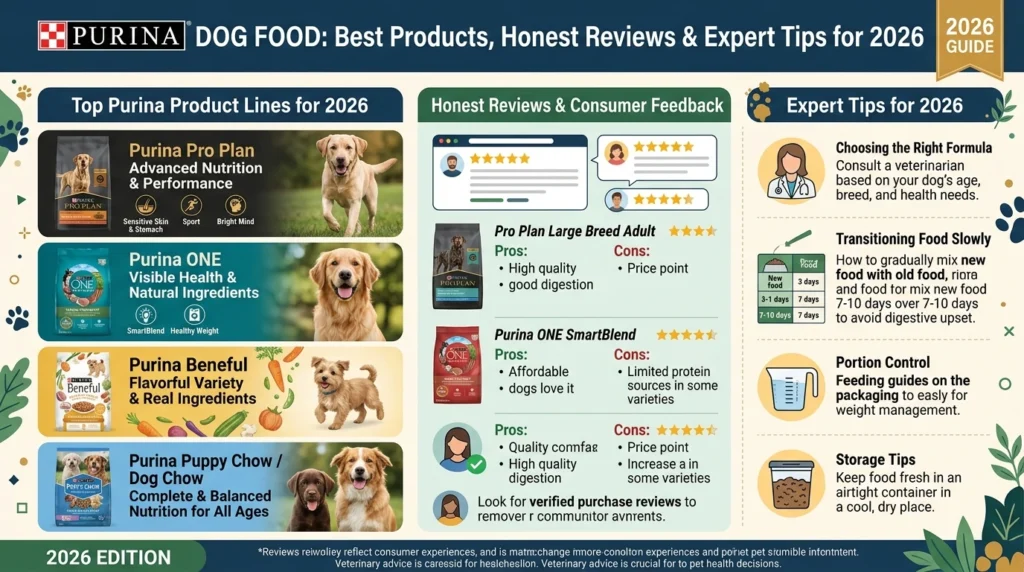
- Transition slowly when switching. Whether you’re moving from another brand to Purina or switching between Purina lines, always transition over 7–10 days. Mix old and new food gradually to avoid digestive upset.
Pro Tip: If your dog is healthy and currently doing well on another quality brand, there’s no urgent need to switch to Purina. But if your dog has digestive sensitivity, dull coat, or low energy, Purina Pro Plan Sensitive Skin & Stomach is one of the first formulas I’d suggest discussing with your vet.
[Victor Dog Food: America’s Super Premium Dog Food – Complete Review]
Purina Dog Food Product Lines: Full Comparison and Best Picks
This is where it gets really useful. Let me walk you through every major Purina line so you know exactly what you’re looking at in the store:
| Product Line | Price Range | Target Dog | Key Feature |
| Purina Dog Chow | $ | Healthy adult dogs | Budget-friendly, whole grain corn base |
| Purina Puppy Chow | $ | Puppies | DHA from omega-rich fish oil |
| Purina Beneful | $ – $$ | Adult dogs | Variety of flavors, wet and dry options |
| Purina ONE | $$ | Adult and senior dogs | Real meat first, no fillers, natural ingredients |
| Purina Pro Plan | $$$ | All life stages | Research-backed, vet-recommended, specialized formulas |
| Purina Pro Plan Veterinary | $$$$ | Dogs with health conditions | Prescription-strength therapeutic nutrition |
| Purina Beyond | $$ | Natural-focused owners | Simple ingredients, no artificial additives |
The Honest Breakdown by Line
Purina Dog Chow It’s the classic. Affordable, widely available, AAFCO-compliant. Whole grain corn features prominently, which isn’t ideal for grain-sensitive dogs, but for a healthy adult dog on a tight budget, it’s a reliable option with decades of feeding data behind it.
Purina ONE This is where Purina starts getting genuinely impressive. Real chicken or beef is the first ingredient, there’s no corn or wheat, and the formulas include natural sources of glucosamine for joint health. It’s a meaningful step up from Dog Chow without breaking the bank.
Purina Pro Plan The crown jewel of the Purina lineup, and honestly one of the best dog foods available at any price point. Real salmon, chicken, or beef leads every formula. It’s backed by more nutritional research than almost any other commercial brand. The Pro Plan Sensitive Skin & Stomach formula is particularly well-regarded for dogs with digestive or dermatological issues.
Purina Pro Plan Veterinary Diets These are prescription-grade therapeutic formulas for dogs managing specific medical conditions kidney disease, urinary issues, obesity, gastrointestinal disorders, and more. You need a vet prescription for these, and they should only be used under veterinary guidance.
Purina Beyond Great for owners who want a simpler, more natural ingredient profile without stepping up to Pro Plan pricing. No artificial colors, flavors, or preservatives. Good middle-ground option.
My Top 3 Picks From the Purina Family
For budget-conscious owners: Purina ONE Adult real meat first, no fillers, solid nutrition at a mid-range price. It’s the sweet spot between cost and quality within the Purina range.
For health-focused owners: Purina Pro Plan Adult Sensitive Skin & Stomach (Salmon & Rice) excellent for dogs with food sensitivities, outstanding digestibility, and one of the most consistently vet-recommended formulas on the market.
For puppies: Purina Pro Plan Puppy (Chicken & Rice) DHA from fish oil for brain and vision development, optimal calcium levels for bone growth, and the research backing you want during those critical early months.
Common Mistakes Dog Owners Make With Purina Dog Food
Even with a trusted brand like Purina, there are pitfalls worth knowing about:
Choosing Based on Price Alone Within the Purina Family
Purina Dog Chow and Purina Pro Plan are both “Purina” but they’re nutritionally quite different. Assuming all Purina products are equivalent because they share a brand name is a mistake. The lines vary significantly in ingredient quality, protein sources, and research backing. Choose based on your dog’s needs, not just the price tag.
Sticking With the Wrong Formula as Your Dog Ages
I’ve seen this so many times a dog who’s been on the same formula since puppyhood, now eight years old, still eating the same high-calorie puppy-style food. Senior dogs have different needs. They typically need fewer calories, more joint support, and sometimes adjusted protein levels. Purina Pro Plan Bright Mind (for seniors 7+) exists specifically for this reason. Reassess your dog’s formula at every major life stage.
Mixing Purina Pro Plan Veterinary Diet With Regular Food
Therapeutic prescription diets are formulated very precisely. If your dog is on a Purina Veterinary Diet for kidney disease or urinary issues, mixing in regular food even a good one can undermine the therapeutic effect. Always follow your vet’s instructions exactly when using prescription formulas.
Overfeeding Because “It’s Healthy”
Purina Pro Plan is nutrient-dense, which means the recommended portions are often smaller than what owners expect. Feeding more than the guidelines suggest even of a great food leads to weight gain over time. Measure portions with an actual measuring cup, not a rough scoop.
Ignoring Recalls and Safety Notices
Purina has a strong quality control record, but no brand is immune to occasional issues. Make it a habit to periodically check the FDA’s pet food recall database and Purina’s own website for any product notices. Staying informed is simply good pet ownership.
Pro Tip: Purina’s website (purina.com) has a built-in product finder tool where you input your dog’s age, size, activity level, and health concerns and it recommends specific formulas. It’s surprisingly helpful as a starting point before you chat with your vet.
Frequently Asked Questions About Purina Dog Food
1. Is Purina Pro Plan worth the higher price compared to other Purina lines?
For most dog owners, yes especially if your dog has any health sensitivities or you simply want the most research-backed nutrition available. Purina Pro Plan uses higher-quality protein sources, has more specialized formulas, and is backed by an extraordinary amount of clinical research. The price difference between Pro Plan and Purina ONE is maybe $15–$20 per bag and for many families, that investment in their dog’s long-term health is absolutely worthwhile. That said, Purina ONE is also an excellent food, and for a healthy dog on a budget, it’s a solid choice.
2. Do vets really recommend Purina Pro Plan?
Yes it’s one of the most commonly recommended brands by veterinarians in the United States, alongside Hill’s Science Diet and Royal Canin. The recommendation comes from Purina’s commitment to nutritional research, quality manufacturing standards, and the availability of specialized therapeutic formulas. Many veterinary schools also use Purina research in their curricula. That said, vet recommendations should always be tailored to your individual dog what works brilliantly for one dog may not be ideal for another.
3. Is Purina dog food safe? Has it had recalls?
Purina has had a small number of recalls over the years, but its safety record is considerably better than many brands of comparable size. The company has robust quality control systems and operates its own manufacturing facilities, which gives them more control over ingredient sourcing and production. Always check the current FDA recall database for any active notices. For a brand of Purina’s scale and history, their safety record is genuinely strong.
4. Which Purina formula is best for dogs with sensitive stomachs?
Purina Pro Plan Adult Sensitive Skin & Stomach (Salmon & Rice formula) is widely considered the go-to recommendation for dogs with digestive sensitivities. It uses salmon as the primary protein (a novel protein for many dogs), rice as a gentle carbohydrate source, and prebiotic fiber to support gut health. Many dogs who’ve struggled with chronic loose stools or gas on other foods show marked improvement within 3–4 weeks on this formula. Consult your vet to confirm it’s appropriate for your dog’s specific situation.
5. Can I feed Purina Dog Chow to my puppy or senior dog?
Purina Dog Chow is formulated for adult dogs. Feeding it to a puppy long-term could create nutritional gaps puppies need specific DHA, protein, and calcium levels that adult formulas don’t provide in the right ratios. For seniors, Dog Chow lacks the joint support and adjusted caloric density that aging dogs benefit from. Always use a formula designed for your dog’s actual life stage. Purina makes dedicated puppy and senior formulas use them.
6. How does Purina Pro Plan compare to Hill’s Science Diet?
Both are excellent, research-backed brands recommended by vets. The main differences come down to specific formula preferences and your dog’s individual needs. Purina Pro Plan tends to be slightly higher in protein and is particularly well-regarded for active dogs and those with sensitive systems. Hill’s Science Diet is often preferred for dogs with specific health conditions and has a strong prescription diet line. Many vets recommend either interchangeably for healthy dogs it often comes down to which formula your individual dog tolerates best. Consult your vet for personalized guidance.
7. Is Purina Beyond a good natural alternative within the Purina family?
Purina Beyond is a solid mid-range option for owners who prioritize natural ingredients and simpler formulas. It contains no artificial colors, flavors, or preservatives and uses recognizable whole food ingredients. It’s not quite at the research-backing level of Pro Plan, but it’s a meaningful step up from Dog Chow and a good option for owners who want a more natural profile without the premium Pro Plan price tag.
The Bottom Line on Purina Dog Food
Here’s what it really comes down to: Purina dog food is one of the most trustworthy, research-backed options you’ll find on any pet store shelf. Whether you’re shopping on a tight budget with Purina Dog Chow, looking for a natural option with Purina Beyond, or investing in the gold standard with Purina Pro Plan, you’re working with a brand that genuinely prioritizes your dog’s health.The key is picking the right formula, not just any Purina bag. Match it to your dog’s life stage, size, health needs, and your budget. And when in doubt, your vet is always the best guide. They know your dog personally, and a quick conversation can save you a lot of trial and error in the food aisle.