
Introduction
Here’s something nobody tells you when you bring home a new dog not all dog food is created equal. Not even close. And some of what’s sitting on store shelves right now, marketed with happy dogs and green fields on the packaging, isn’t doing your pup any favors.
I know that sounds alarming. But the truth is, knowing which dog food brands to avoid is just as important as knowing which ones to buy. The pet food industry is massive, and not every brand prioritizes your dog’s health over profit margins.
Over the years, I’ve dug through ingredient labels, followed FDA recalls, and watched the research evolve and there are clear patterns in the brands and ingredients that consistently raise red flags.
This guide isn’t about fear-mongering. It’s about giving you the real, honest information you need to make a smart decision at the pet store. By the end, you’ll know exactly what to watch out for, which warning signs to spot on any label, and what better options look like. Let’s get into it.
Why Some Dog Food Brands Are Worth Avoiding
Before we name names, let’s understand why certain dog food brands end up on the “avoid” list. It’s rarely one single thing it’s usually a pattern of concerning ingredients, manufacturing practices, or a track record of recalls.
Low-Quality Protein Sources
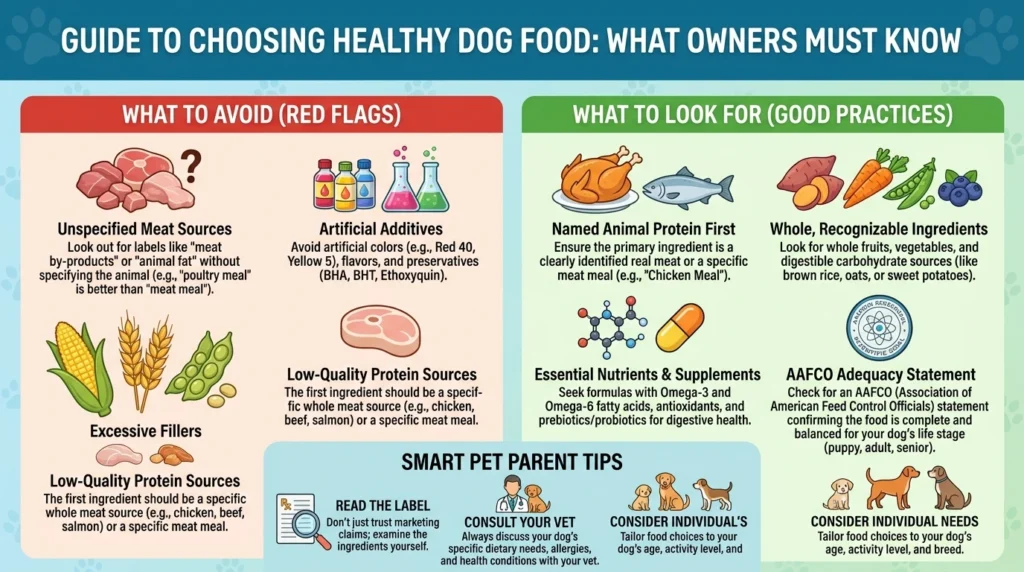
Protein is the most important macronutrient in your dog’s diet. But not all protein is equal. Some brands use “meat by-products” or “animal digest” vague terms that can include beaks, feet, intestines, and other parts you’d never intentionally feed your dog.
Compare that to a brand that lists “deboned chicken” or “salmon” as the first ingredient. The difference in nutritional quality is significant.
Excessive Fillers With Little Nutritional Value
Corn, wheat, and soy are cheap. They bulk up a bag of kibble and keep production costs low. In small amounts, some of these aren’t harmful but when corn or wheat gluten is one of the top three ingredients, your dog is eating mostly filler, not food.
Dogs are primarily carnivores. Their digestive systems are built for protein and fat not mountains of grain-based carbohydrates.
Artificial Additives and Preservatives
Ever seen BHA, BHT, or ethoxyquin on a dog food label? These are synthetic preservatives that have raised concerns in research communities for years. The FDA limits ethoxyquin in human food but allows higher levels in pet food which is worth paying attention to.
Artificial colors like Red 40 and Yellow 5 serve zero nutritional purpose. They’re purely cosmetic. Any brand adding those to dog food is prioritizing appearance over your dog’s health.
A History of Recalls
This is a big one. Some brands have faced multiple FDA recalls for contamination salmonella, listeria, elevated vitamin D toxicity, and even pentobarbital (a euthanasia drug) found in dog food. A single recall doesn’t doom a brand, but a pattern of them tells you something about quality control.
Pro Tip: Bookmark the FDA’s pet food recall page and check it every few months. It’s free, updated regularly, and could genuinely protect your dog’s life.
How to Identify a Problematic Dog Food Brand: 7 Warning Signs
You don’t need a nutrition degree to spot a red-flag dog food. Here’s exactly what to look for on any bag or can:
- The first ingredient isn’t a named meat. If “corn,” “wheat,” “soy,” or a vague term like “meat meal” is listed first, that’s your first warning. Real quality food leads with a specific protein like chicken, beef, or lamb.
- Multiple corn or soy derivatives listed separately. Brands sometimes split ingredients like “corn,” “corn gluten meal,” and “corn syrup” to make each individual amount look smaller but combined, corn is dominating the formula. This is called ingredient splitting, and it’s a deliberate trick.
- Artificial preservatives (BHA, BHT, ethoxyquin). These synthetic chemicals extend shelf life but have questionable long-term safety profiles. Look for natural preservatives like mixed tocopherols (Vitamin E) or rosemary extract instead.
- No AAFCO nutritional adequacy statement. This statement confirms the food meets minimum nutritional standards. If it’s missing from the label, the food hasn’t been verified as nutritionally complete. Walk away.
- Vague protein sources. “Poultry by-product meal” and “animal fat” tell you almost nothing about what’s actually in the food. Quality brands are specific “chicken fat,” “turkey meal,” “salmon oil.”
- A history of recalls. Always Google the brand name + “recall” before buying. A long recall history, especially for contamination issues, is a serious red flag.
- No clear manufacturer contact information. Reputable brands list their manufacturing facility, contact details, and batch/lot numbers clearly. If that info is hard to find, that’s a transparency problem.
[Pork Dog Food: Benefits, Precautions, and Best Brands 2026]
Dog Food Brands That Consistently Raise Concerns
Let me be clear upfront: this section is based on publicly available information FDA recall records, ingredient analysis, and expert nutritionist reviews. This isn’t about attacking brands personally. It’s about giving you the facts so you can make your own informed decision.
| Brand | Main Concerns | Recall History |
| Ol’ Roy (Walmart store brand) | Vague protein sources, heavy corn fillers, artificial preservatives | Yes multiple |
| Kibbles ‘n Bits | Corn and soy dominate ingredients, artificial colors, low meat content | Yes |
| Alpo | By-products as primary protein, artificial flavors, low nutritional density | Yes |
| Gravy Train | Pentobarbital contamination found in 2018 FDA testing | Yes serious |
| Showtime Dog Food | Low-quality ingredients, limited transparency, recall history | Yes |
| Sportmix | Linked to aflatoxin contamination; FDA investigated dozens of dog deaths | Yes serious |
A Closer Look at the Most Serious Cases
Gravy Train made headlines in 2018 when testing revealed trace amounts of pentobarbital a drug used to euthanize animals in its wet food products. This strongly suggested euthanized animals were making it into the supply chain. That’s not a minor quality issue. That’s a fundamental manufacturing failure.
Sportmix was linked to an FDA investigation in 2021 after aflatoxin poisoning caused by mold on corn was connected to the deaths of dozens of dogs across multiple states. The brand issued a massive recall, but the damage was devastating for affected families.
These are n’t scare stories. They’re documented, public record. And they’re exactly why ingredient sourcing and manufacturing transparency matter so much.
Pro Tip: If you’re currently feeding your dog one of the brands listed above and your dog seems healthy, don’t panic but do consider transitioning to a higher-quality option over the next few weeks. Talk to your vet about the best approach.
Dangerous Ingredients to Watch for on Any Dog Food Label
Beyond specific brands, here are the ingredients that should make you pause on any product:
Ingredients That Are Red Flags
- Propylene glycol: used to keep semi-moist foods chewy; already banned in cat food by the FDA but still permitted in some dog foods
- BHA and BHT: synthetic antioxidants that preserve fat; classified as possible carcinogens by the World Health Organization
- Ethoxyquin: a chemical preservative originally developed as a pesticide; concerns exist about its long-term safety in pets
- Artificial colors (Red 40, Yellow 5, Blue 2) : zero nutritional benefit, purely cosmetic, and linked to behavioral sensitivities in some research
- Rendered fat from “unspecified sources”: could come from restaurant grease traps or other unregulated sources
- Corn syrup: added sugar that causes blood sugar spikes and contributes to obesity and dental problems
Ingredients That Sound Bad But Aren’t
To be fair, a few ingredients get a bad reputation unfairly:
- Chicken by-product meal: not ideal, but it does contain concentrated protein. A named by-product (like “chicken” by-product) is more acceptable than unnamed “poultry” by-product.
- Grain (corn, wheat, rice) :not inherently harmful for most dogs. The problem is when they dominate the formula at the expense of protein.
- Meat meal: if it’s from a named source (“chicken meal,” “salmon meal”), it’s actually a concentrated protein source and not automatically a red flag.
Frequently Asked Questions About Dog Food Brands to Avoid
1. How do I know if a dog food brand has been recalled?
The best source is the FDA’s official pet food recall database at fda.gov. You can search by brand name or browse recent recalls. The website Dog Food Advisor (dogfoodadvisor.com) also maintains a comprehensive recall history list and rates brands based on ingredients and recall records. I’d recommend checking both before committing to a new food.
2. Is cheap dog food always bad for my dog?
Not always but it does require more scrutiny. Affordable brands sometimes cut corners on ingredient quality to keep costs down. That said, brands like Purina Dog Chow manage to be budget-friendly while still meeting solid nutritional standards. The price isn’t the problem it’s what they sacrifice to hit that price. Always check the ingredient list and AAFCO statement regardless of cost.
3. My dog has eaten a recalled brand for years and seems fine. Should I be worried?
This is a conversation worth having with your vet. Some contamination issues (like aflatoxin or excessive vitamin D) cause slow, cumulative damage that isn’t immediately obvious. “Seems fine” doesn’t always mean “is fine” especially with liver or kidney-related toxins that build up over time. A simple vet check and bloodwork can give you peace of mind. Please don’t skip that conversation.
4. Are grain-free dog foods safer than grain-inclusive ones?
Not necessarily and in some cases, they carry their own risk. The FDA has been investigating a potential link between grain-free diets and dilated cardiomyopathy (DCM), a serious heart condition, since 2018. The connection appears strongest with foods that feature peas, lentils, or legumes as primary ingredients (common in grain-free formulas). Unless your vet has recommended grain-free for a specific medical reason, there’s no evidence that avoiding grains makes a food healthier.
5. What are the safest dog food brands I can switch to?
Based on ingredient quality, manufacturing transparency, and recall history, these brands consistently earn high marks from nutritionists and vets:
- Purina Pro Plan research-backed, excellent quality control, wide range of formulas
- Hill’s Science Diet vet-recommended, strong nutritional science behind formulations
- Royal Canin breed and condition-specific formulas, rigorous manufacturing standards
- Orijen premium, high-protein, biologically appropriate ingredients
- Merrick real meat first, no artificial additives, solid transparency
Always transition to any new food gradually over 7–10 days, and consult your vet if your dog has any existing health conditions.
6. Can I trust “natural” or “organic” labels on dog food?
These terms are largely unregulated in the pet food industry. “Natural” has a loose definition it mainly means no synthetic additives, but doesn’t guarantee ingredient quality or nutritional value. “Organic” is more regulated (similar to human food standards) but still doesn’t automatically make a food nutritionally superior. Don’t let marketing language do the work for you always read the actual ingredient list.
7. How often should I check my dog’s food for recalls?
I’d suggest checking every 1–2 months, or any time you notice your dog having unusual symptoms like vomiting, lethargy, or changes in appetite. Sign up for the FDA’s pet food recall email alerts so you’re notified automatically it takes two minutes and could make a real difference.
Conclusion: Protecting Your Dog Starts With What’s in the Bowl
Knowing which dog food brands to avoid is one of the most practical things you can do as a dog owner. It’s not about spending a fortune on food it’s about spending wisely and knowing what the red flags look like.
Here’s the short version: look for named protein sources at the top of the ingredient list, check for the AAFCO statement, avoid brands with serious or repeated recall histories, and steer clear of artificial preservatives and mystery meat ingredients.
Your dog can’t read the label. That’s your job and you’re clearly taking it seriously by being here. Give your vet a call if you’re unsure about your current food choice, especially if your dog has been showing any changes in energy, coat condition, or digestion.