
Introduction
You love your dog. That’s why you’re here standing in the pet food aisle (or scrolling at midnight) wondering, “Is Pedigree dog food actually good for my dog, or am I just buying into the marketing?”
I’ve been asked this question more times than I can count. And honestly? The answer isn’t a simple yes or no it depends on your dog’s age, size, health, and what you’re comparing it to.
Pedigree: is one of the most recognizable dog food brands in the world. It’s affordable, widely available, and has been around since 1957. But popularity doesn’t always equal quality so let’s actually dig in.
In this guide, you’ll get a full breakdown of Pedigree dog food what’s in it, what’s good, what to watch out for, and how to decide if it’s the right choice for your furry best friend.
What Is Pedigree Dog Food? (And Why Is It So Popular?)
Pedigree is a brand owned by Mars Petcare, one of the largest pet food companies on the planet. You’ll find it in grocery stores, pet shops, and online retailers pretty much everywhere.
It comes in a wide range of formats dry kibble, wet food, pouches, and treats for puppies, adult dogs, and senior dogs. That variety is a big reason families love it. It’s a one-stop-shop kind of brand.
But what really made Pedigree a household name is its accessibility. Not everyone can spend $80 a month on premium dog food, and Pedigree fills that gap. It’s budget-friendly without feeling completely cheap.
Pro Tip: Just because a food is affordable doesn’t mean it’s bad and just because it’s expensive doesn’t mean it’s perfect. Always read the label before you buy.
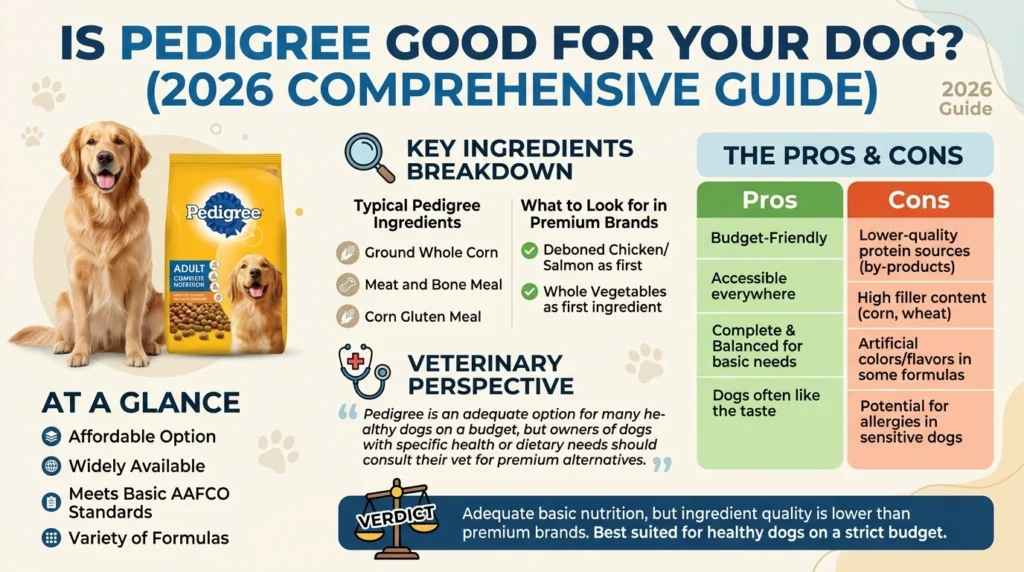
Pedigree markets itself around the idea of “complete and balanced nutrition”, which is a regulated term meaning the food meets the AAFCO (Association of American Feed Control Officials) minimum nutritional standards. That’s a good baseline but let’s look deeper.
Breaking Down Pedigree Dog Food Ingredients
This is where things get interesting. Let me walk you through what’s actually inside that bag.
The Good Stuff
Pedigree’s Adult Complete Nutrition Dry Dog Food (one of their bestsellers) typically lists these top ingredients:
- Whole grain corn ; a carbohydrate source for energy
- Meat and bone meal ; a protein source (more on this below)
- Corn gluten meal ; another protein contributor
- Animal fat ; for coat health and energy
- Natural flavors ; to make it palatable
Pedigree also adds vitamins and minerals, including Vitamin E, zinc, and omega-6 fatty acids, which support skin, coat, and immune health.
The Controversial Bits
Here’s where I want to be honest with you. Some ingredients in Pedigree raise eyebrows among dog nutrition experts:
- Meat and bone meal; is a rendered protein not the same as fresh chicken or beef. It’s a more affordable protein source, but the exact animal origin isn’t always specified.
- Corn; features heavily as a filler ingredient. While not harmful, some dogs with grain sensitivities don’t do well with high-corn diets.
- Artificial colors; (like caramel color) appear in some formulas unnecessary for dogs and purely cosmetic.
None of these ingredients are dangerous for most dogs. But if your dog has food sensitivities, allergies, or specific health conditions, you’ll want to consult your vet before choosing any food Pedigree included.
Dog Food Limited Ingredient: Complete Information and Best Choice
Pedigree Product Range: Which One Is Right for Your Dog?
Here’s a quick comparison of the main Pedigree lines to help you pick:
| Product Line | Best For | Key Feature |
| Adult Complete Nutrition | Healthy adult dogs | Balanced daily nutrition |
| Puppy Complete Nutrition | Puppies under 1 year | DHA for brain development |
| Senior Dog Food (7+) | Older dogs | Glucosamine for joint support |
| Wet Food / Pouches | Picky eaters or dental issues | High moisture, soft texture |
| Pedigree Dentastix | All ages (treat) | Clinically proven plaque reduction |
How to Pick the Right Formula
- Check your dog’s age first; puppy, adult, or senior formulas are nutritionally different.
- Consider your dog’s size: some Pedigree lines are formulated for small vs. large breeds.
- Think about texture; does your dog prefer dry kibble or wet food? Some dogs (especially seniors) do better with softer food.
- Watch for specific health needs; joint issues, weight management, or sensitive stomachs may call for specialized formulas.
- Transition slowly; if switching from another brand, mix Pedigree in gradually over 7–10 days to avoid tummy upset.
Pro Tip: Always provide fresh water alongside dry kibble. Dry food has low moisture content, and hydration matters more than most pet owners realize.
Pedigree vs. Other Popular Dog Food Brands
Wondering how Pedigree stacks up against the competition? Here’s a straightforward comparison:
| Feature | Pedigree | Royal Canin | Hill’s Science Diet | Blue Buffalo |
| Price Range | $ (Budget) | $$$ (Premium) | $$$ (Premium) | $$ (Mid-range) |
| Protein Source | Meat & bone meal | Chicken/fish (named) | Chicken/fish (named) | Real chicken |
| Grain-Free Option | No | Some | Some | Yes |
| Life Stage Options | Yes | Yes | Yes | Yes |
| Vet Recommended | Sometimes | Frequently | Frequently | Sometimes |
| AAFCO Compliant | Yes | Yes | Yes | Yes |
The honest truth? Pedigree is a solid budget option that does the job for most healthy dogs. If you can afford premium food and your dog has specific needs, brands like Hill’s or Royal Canin may offer more targeted nutrition but they’re not always necessary for every dog.
Common Mistakes Dog Owners Make With Pedigree (Avoid These!)
Even with a straightforward brand like Pedigree, I’ve seen owners make some avoidable mistakes. Here’s what NOT to do:
1. Feeding the Wrong Life Stage Formula
Puppy food is calorie-dense. If you accidentally feed your adult dog puppy food long-term, weight gain and nutritional imbalance can follow. Always match the food to your dog’s life stage.
2. Overfeeding “Because They Love It”
Dogs are enthusiastic eaters that doesn’t mean they need more. Follow the feeding guidelines on the packaging and adjust based on your dog’s actual weight and activity level.
3. Ignoring Food Transitions
Switching cold turkey from one brand to another is a recipe for digestive upset. Loose stools, gas, and vomiting are common when you don’t transition gradually. Mix old and new food over 7–10 days.
4. Relying Only on Dry Kibble Without Variety
Pedigree dry food is nutritionally complete, but adding a little wet food, fresh vegetables (like carrots or green beans), or a vet-approved topper can keep mealtime interesting and add moisture to your dog’s diet.
5. Skipping Vet Check-ins
Even if your dog seems fine, annual vet visits help catch nutritional gaps, weight changes, or food-related issues early. If your dog shows signs like dull coat, excessive scratching, or low energy, it’s worth a conversation with your vet about diet.
Pro Tip: Keep a simple food journal for 2–3 weeks when you switch foods. Note your dog’s energy, stool quality, coat shine, and appetite. It tells you more than any ingredient label.
Frequently Asked Questions About Pedigree Dog Food
1. Is Pedigree dog food safe for my dog?
Yes, Pedigree is generally safe for healthy dogs. It meets AAFCO nutritional standards, meaning it provides complete and balanced nutrition. However, dogs with specific allergies (especially to corn or gluten) may not tolerate it well. Always consult your vet if you have concerns about ingredients.
2. Is Pedigree good for puppies?
Pedigree makes a dedicated Puppy Complete Nutrition formula that includes DHA (from fish oil) to support brain and vision development. It’s a decent affordable option for puppies, though some vets recommend breed-specific puppy foods for large breeds due to calcium-to-phosphorus ratio concerns. Ask your vet what’s best for your specific pup.
3. Can I feed my dog Pedigree every day?
Yes, Pedigree is designed to be a complete daily diet. Just make sure you’re using the right formula for your dog’s life stage and following the recommended serving sizes. Variety (like occasionally mixing in safe fresh foods) can be beneficial but isn’t required.
4. Why does my dog seem gassy after eating Pedigree?
Corn-heavy diets can cause gas in some dogs, especially those with sensitive stomachs. If the issue persists beyond the first couple of weeks, it might signal that this formula isn’t the best fit for your dog. Try a limited-ingredient or grain-free formula, and check in with your vet.
5. How does Pedigree compare to homemade dog food?
Homemade dog food can be excellent but only if it’s properly balanced. Many homemade diets are accidentally deficient in calcium, zinc, or key vitamins. Pedigree is nutritionally formulated to avoid those gaps, which is an advantage for busy pet owners. If you’re interested in homemade diets, always work with a veterinary nutritionist.
6. Is Pedigree dog food grain-free?
No, most Pedigree formulas contain grains (primarily corn). There is currently no grain-free line from Pedigree. If your dog needs a grain-free diet, you’ll need to explore other brands. Grain-free diets have also been associated with dilated cardiomyopathy (DCM) in some cases always discuss dietary changes with your vet before switching.
7. What’s the best Pedigree product for a senior dog?
Pedigree’s Senior 7+ formula is designed with older dogs in mind lower calories to prevent weight gain, and added glucosamine to support aging joints. For senior dogs with specific health issues (kidney disease, arthritis, diabetes), your vet may recommend a prescription diet over any commercial food.
Conclusion: Should You Choose Pedigree Dog Food?
Here’s the bottom line Pedigree dog food is a legitimate, accessible option for most healthy dogs. It’s not the fanciest food on the shelf, and it’s not pretending to be. But it’s nutritionally complete, widely available, affordable, and backed by decades of research from Mars Petcare.
If you’re on a budget, have a healthy adult dog with no known allergies, and want reliable daily nutrition Pedigree does the job.
That said, every dog is different. If your pup has food sensitivities, breed-specific needs, or health conditions, it’s always worth a conversation with your vet about whether Pedigree or any brand is the right fit.